MND research at QBI
Queensland Brain Institute (QBI) researchers are advancing the understanding, diagnosis and treatment of motor neurone disease (MND) through cutting-edge neuroscience research. By combining molecular biology, genetics, imaging and clinical research, QBI is working to uncover the causes of MND and accelerate the development of effective therapies.
Understanding the biology of MND
Genetics and disease mechanisms
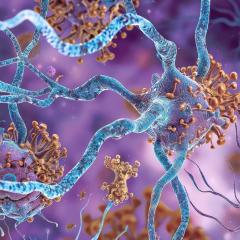
A subset of MND cases are caused by inherited genetic mutations, including mutations in the SOD1 (superoxide dismutase 1) gene. QBI researchers continue to use established models to study how motor neurons degenerate and to test potential therapies. Most MND cases, however, involve abnormalities in the protein TDP‑43, a hallmark of the disease. TDP‑43 is an essential RNA-binding protein that regulates gene expression and RNA processing. In MND, TDP‑43 becomes mislocalised and forms toxic aggregates inside neurons, disrupting normal cellular function.
Biomarkers and early diagnosis of MND
One of the biggest challenges in treating motor neurone disease is the lack of reliable early diagnostic tools. QBI researchers are developing and refining MND biomarkers to improve diagnosis and disease monitoring, including:
- Blood-based biomarkers to detect disease earlier and predict progression
- Neurofilament proteins and other indicators of neuronal damage
Dr John Lee and his team are investigating how biomarkers and immune-related pathways can be used to better understand MND progression and support clinical trials.
Developing new treatments for MND
The treatment landscape for MND is rapidly evolving, with increasing focus on targeted therapies and gene-based approaches.
NUN‑004 clinical development
Emeritus Professor Perry Bartlett and his team have developed a novel therapeutic candidate, NUN‑004, based on decades of neuroscience research.
- Completed a Phase 1a/b clinical trial
- Demonstrated safety and tolerability in humans
- Showed early indications of the potential to slow disease progression
Development is continuing through UQ spin-out company NuNerve, with further clinical trials planned.
Inflammation and immune pathways in MND
Ross Maclean Research Fellow, Dr John Lee, is investigating how inflammation and immune system dysfunction contribute to MND progression. His work focuses on identifying new drug targets and therapies, including a compound that has recently completed Phase 1B clinical trials. His team is also collaborating internationally to improve drug delivery options for MND patients.
Gene therapy approaches
Dr Margreet Ridder is leading innovative research into gene therapy for MND, focusing on reducing harmful overactivity in motor neurons. Her work aims to determine whether regulating neuronal excitability can protect cells and slow disease progression.
Protein biology and nanoscale research
Dr Adekunle Bademosi is using advanced nanoscale imaging to study how proteins such as TDP‑43 change in neurodegenerative diseases. This research provides critical insights into the molecular mechanisms of MND and related conditions such as frontotemporal dementia.
Further information and support
For more information or support:
MND Australia
02 9816 5322
info@mndaust.asn.au