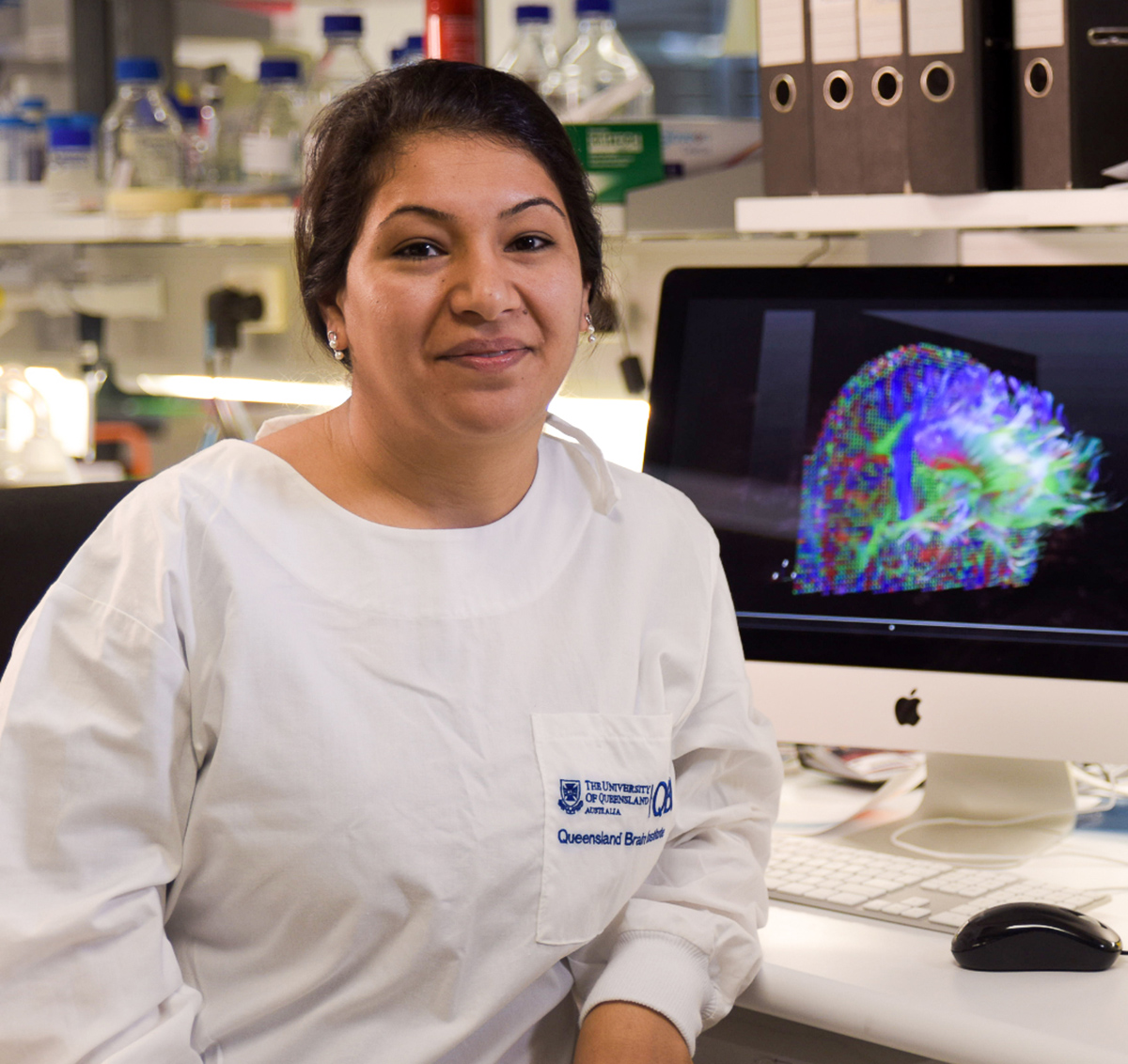
Traumatic brain injury (TBI) occurs when an external force traumatically injures the brain, often as a result of traffic accidents, sports injuries, or violence. The effects of TBI can range from a concussion to severe brain damage and even death. Signatured with a complex pathophysiology, TBI encompasses changes to molecular, cellular, functional, and gross anatomical structure with a cascade of deleterious physiological changes following the initial impact. Recent studies have shown TBI to be associated with an increased risk of early-onset dementia, as key protein aggregates, which incidentally also play a role in Alzheimer’s disease and frontotemporal dementia, have been reported in patients who have sustained a TBI.
Previously, Dr Nasrallah has demonstrated extensive experience in the application of multimodality imaging methods such as magnetic resonance imaging (MRI), especially resting state functional MRI (rsfMRI), positron emission tomography and electrophysiology, to understand brain function in rodents and humans.
She was able to demonstrate, for the first time, the potential to detect changing resting state networks following a cognitive task in the sedated rodent brain using rsfMRI. She was also the first to detect such resting state functional connectivity networks in the mouse brain.
Having moved to QBI in late 2015, her laboratory aims to harness multimodality methods to identify and comprehend the fundamental mechanisms triggered following TBI. This will allow mapping of structural, functional, metabolic and molecular changes in the brain in an attempt to cross-link imaging metrics with behavioural measures and protein biomarkers, giving insight into the pathophysiology of TBI and its link to dementia. The scope of the research will include: (1) development and validation of animal models of TBI, (2) development of specific imaging tools and diagnostic molecular biomarkers of TBI and dementia, and (3) translation of novel imaging tools and biomarkers to clinical investigations.
Group leader

Associate Professor Fatima Nasrallah
MAIC Senior Research Fellow - GL, Queensland Brain Institute
+61 7 344 33004
f.nasrallah@uq.edu.au
UQ Researcher Profile
Honours projects available
Mapping the functional connectome following a concussion
Resting state functional connectivity using fMRI has become an important tool in examining differences in brain activity between patient and healthy populations. It describes interregional correlations across the brain and has gained prominence in recent years not only for its usefulness in highlighting several functional neural networks of the brain, but also for identifying neuroimaging biomarkers of a disorder.
This work will focus on understanding the functional connectome in the brain and how the temporal profile of these brain networks change over time following a concussive injury, specifically in sports-related concussion.
The candidate will gain experience in multimodality imaging methods, data analysis of imaging data, and a better understanding of the biomarkers that are related to concussion detection and prediction.
Probing markers of axonal injury and tissue integrity in traumatic brain injury patients using Diffusion tensor imaging
Traumatic brain injury affects a significant number of patients worldwide. The changes in the brain that provide us with sufficient information to predict patient outcomes are not known.
In this project we aim to use advanced magnetic resonance imaging (MRI), specifically diffusion tensor imaging, to determine changes in the grey and white matter of the brain to allow better interpretation of whether these changes allow for better diagnosis of injury severity and better prognostication of patient outcome.
Gained skills: The project will provide candidates with the theoretical and technical expertise relevant to multimodal MRI imaging, MRI data processing, and the software skills that would allow them to interpret the next stage of MRI data that may become the standard of care in the clinic.
Prior experience: an interest in magnetic resonance imaging and traumatic brain injury. The work would be suitable for students with a background in medicine, biomedical sciences, computational neuroscience, biomedical engineering, engineering, neuroscience or other areas of study. No prior experience in MRI imaging and data processing is required although this would be preferable and the candidate will be able to learn such skills as part of the process.
Blood brain barrier leakiness measured with magnetic resonance imaging following a traumatic brain injury
The blood brain barrier (BBB) is the border that protects our brain. Following a traumatic brain injury, the blood brain barrier becomes leaky and we can use magnetic resonance imaging, specifically, dynamic contrast enhanced MRI, to measure this leakiness. We have data that has been collected and is being collected to investigate ways to monitor BBB leakiness and determine whether it can predict the outcome of a patient following a traumatic brain injury.
Gained skills: The project will provide candidates with the theoretical and technical expertise relevant to multimodal MRI imaging, MRI data processing, and the software skills that would allow them to interpret the next stage of MRI data that may become the standard of care in the clinic.
Prior experience: an interest in magnetic resonance imaging and traumatic brain injury. The work would be suitable for students with a background in, but not limited to, medicine, biomedical sciences, computational neuroscience, biomedical engineering, engineering, neuroscience or other areas of study. No prior experience in MRI imaging and data processing is required although this would be preferable, and the candidate will be able to learn such skills as part of the process.
PhD projects available
Prediction of outcome following mild traumatic brain injury: a combined artificial intelligence and magnetic resonance imaging approach.
Mild traumatic brain injury is a condition which occurs from a mild blow to the head, either with or without loss of consciousness, and can lead to temporary or persistent long term cognitive symptoms. One issue is that a significant proportion of cases are not visible on computed tomography (CT) scans or conventional magnetic resonance imaging scans (MRI).
In this work we will be using our own data and data from the TRACK-TBI dataset to investigate multimodal MRI for the prediction of patient outcome. The study will also apply novel artificial intelligence and machine learning models to predict patient outcome and determine early on those who will suffer persistent symptoms from concussion which will allow for early clinical intervention and better delivery of treatment.
Prior experience with machine learning would be preferable.
A multimodal magnetic resonance imaging approach for investigating outcome following a traumatic brain injury
Traumatic brain injury is a very complex condition and involves both primary and secondary processes which contribute to the long-term outcome of patients. Magnetic Resonance Imaging is an advanced imaging method that can give good temporal and spatial information about the brain noninvasively. There are a number of MRI methods that each target different aspects of brain function and we would like to use all these modalities combined to determine the correlation between different processes that are ongoing following a traumatic brain injury and which of those modalities best allows us to determine such an outcome. Machine learning will be applied on the data to best predict the methods most relevant to outcome.
Gained skills: The project will provide candidates with the theoretical and technical expertise relevant to multimodal MRI imaging, MRI data processing, and the software skills in addition to experience in machine learning methods.
Prior experience: Prior experience with machine learning and MRI would be preferable.
Research Areas
- Traumatic brain injury (TBI)
- Early-onset dementia
- Concussion
Latest news
-
Putting her concern about head knocks to good use
21 February 2023 -
Concussion can’t stop rugby superstar on the rise
24 November 2022