
Group leader
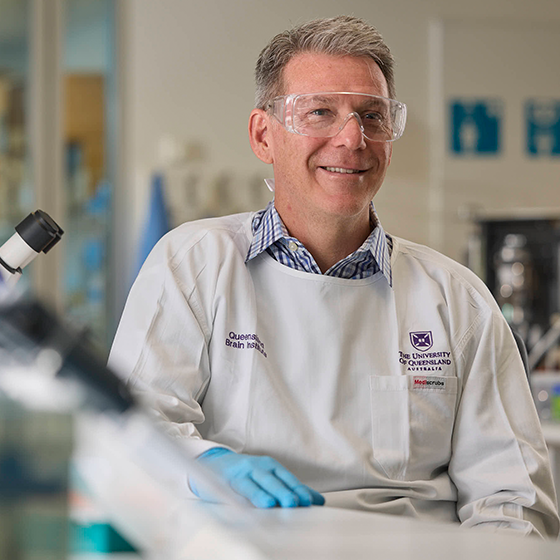
Professor Timothy Bredy
 Timothy Bredy
Fear, memory, and brain adaptation
The Bredy lab investigates how fear-related memories are formed, stored, and updated in the brain to understand why these processes become disrupted in disorders, such as PTSD, anxiety, and phobias. A major focus of this work is fear extinction, essential for recovery from trauma and forms the foundation of many exposure-based therapies.
The lab investigate how epigenetic mechanisms regulate the neural plasticity required for learning and memory. Their research examines how dynamic changes in DNA structure, RNA modifications, and noncoding RNAs influence gene expression and cell function during fear learning and extinction. Examining these processes uncovers the biological mechanisms that enable the brain to adapt to experience and update previously formed memories.
Our research focus
A key area of discovery is the role of RNA in memory formation. The lab has identified novel populations of learning-related RNAs at neuronal synapses and revealed important functions for noncoding RNAs, including Gas5, in regulating fear extinction memory. They are investigating how chemical modifications to RNA shape neuronal communication and memory-related gene regulation, providing new insights into the molecular architecture of learning and behavioural adaptation.
By definining the molecular pathways that support adaptive learning, memory flexibility, and cognitive resilience, the team aim to identify new therapeutic targets for PTSD, anxiety disorders, and other neuropsychiatric conditions. This research seeks to advance the development of innovative RNA-based therapeutics to improve cognitive function and mental health outcomes
Latest news
- Researchers from UQ’s Queensland Brain Institute (QBI) have found evidence that tiny cellular “spaceships” called vaults may play an important role in how the brain forms memories.
- An international collaborative research team, including scientists from the Queensland Brain Institute (QBI) has discovered that G-quadraplex DNA (G4-DNA) accumulates in neurons and dynamically controls the activation and repression of genes underlying long-term memory formation.
- Researchers have discovered a new way RNA impacts fear-related learning and memory, demonstrating that a noncoding RNA known as Gas5 coordinates the trafficking and clustering of RNA molecules inside the long processes of neurons,contributing to learning and memory.
- A piece of “junk DNA” could be the key to extinguishing fear-related memories.
- New research shows that the ability to extinguish fearful memories relies on the flexibility of your DNA.
- A PhD student pushing the boundaries of technology to understand our brain’s response to fear has won a Westpac Future Leader Scholarship.
Pages
Memory: The Hidden Pathways That Make Us Human | World Science Festival
RNA Q&A
Cutting-edge technologies, such as long-read sequencing, are giving researchers, like Professor Timothy Bredy unprecedented insights into cells to better understand the functional roles of various classes of RNA.