
Interactions in learning and development

InterACT: Advancing and unpacking the science of interaction
The Interact team explores how everyday interactions between adults and children spark learning, connection, and growth. Our research examines the ingredients of sensitive, responsive, and enriching interactions—and transforms this science into practical guidance for families, educators, community organisations, and policymakers.
The InterACT toolkit has been designed by researchers at QBI
|
|
|
|
|
|
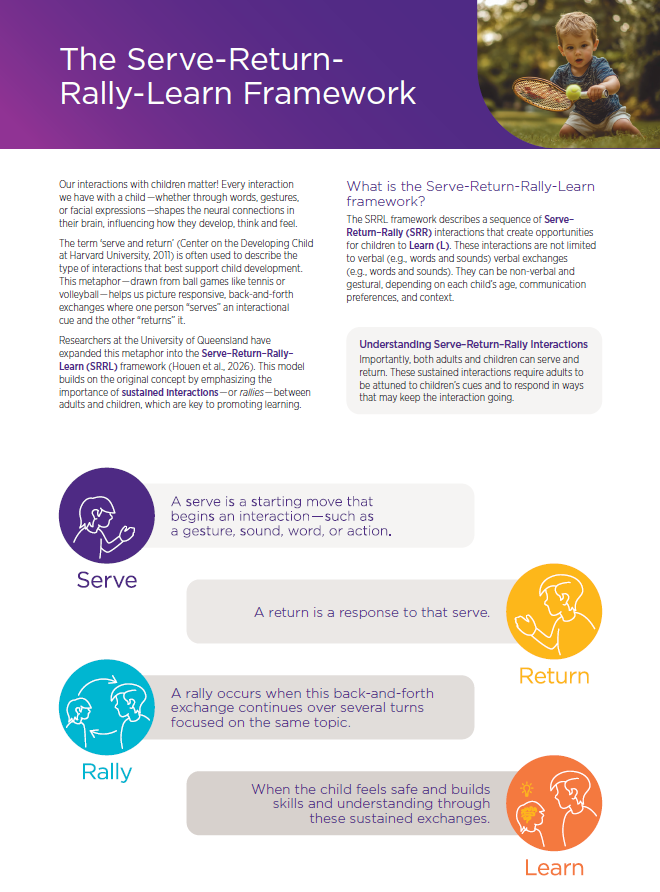
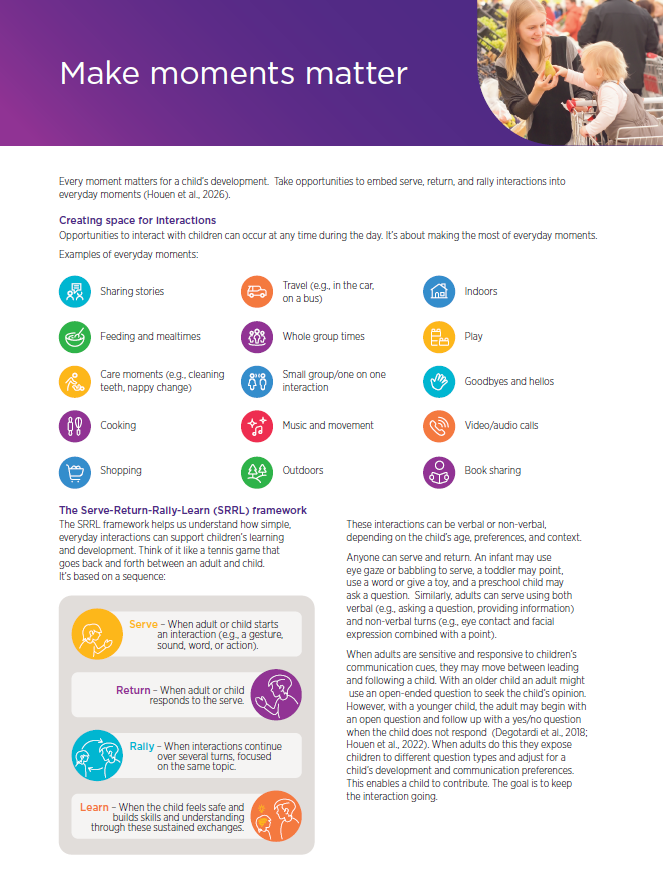

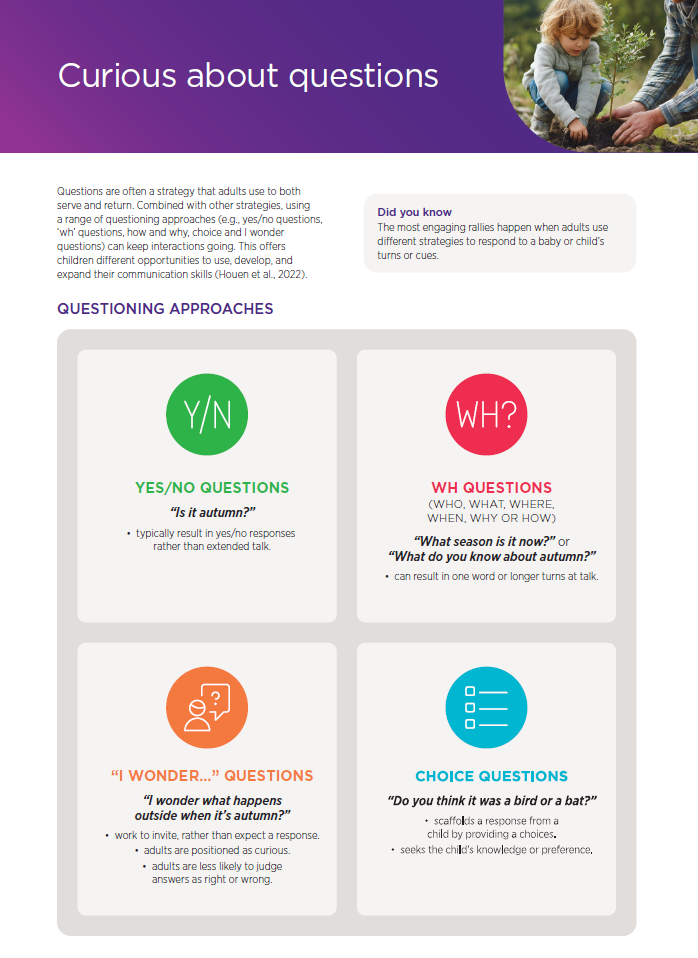


Coming soon
The InterACT objectives
- Explore how adults engage in sensitive, responsive and enriching interactions with children.
We analyse naturalistic interaction to understand the interactional strategies that foster sustained, high-quality engagement.
- Understand how children’s interactions shape their development.
We aim to understand how variations in interaction—such as the types of mental state language children hear or the extent to which conversations become extended “rallies”—relate to children’s language development, social understanding, emotion regulation, and early learning outcomes.
- Translate the science of interaction into real-world impact.
We work closely with families, educators, community organisations, and policymakers to transform evidence into practical, actionable guidance. Our goal is to support adults in making everyday interactions richer, more equitable, and more developmentally powerful for all children.
Current projects
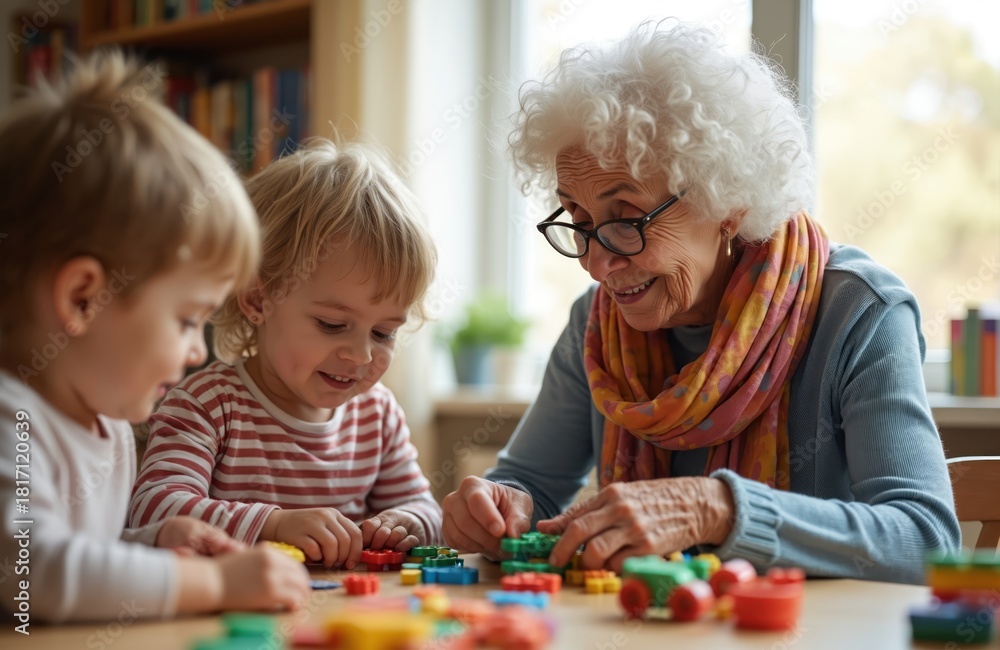

Media
Early childhood educators change how they speak to toddlers depending on gender
Publications
Houen, Sandy, Staton, Sally, Mulvihill, Aisling and Thorpe, Karen (2026). Serve-return-rally-learn: extending the serve and return metaphor in adult–child interactions. Child Development Perspectives aadaf005. doi: 10.1093/cdpers/aadaf005
Houen, Sandy, Thorpe, Karen, van Os, Danielle, Westwood, Emily, Toon, Danielle and Staton, Sally (2022). Eliciting and responding to young children's talk: a systematic review of educators' interactional strategies that promote rich conversations with children aged 2–5 years. Educational Research Review, 37 100473, 100473. doi: 10.1016/j.edurev.2022.100473
Mulvihill, Aisling, Armstrong, Rebecca, Casey, Charlotte, Redshaw, Jonathan, Scarinci, Nerina and Slaughter, Virginia (2023). Early childhood educators' mental state language and children's theory of mind in the preschool setting. British Journal of Developmental Psychology, 41 (3), 227-245. doi: 10.1111/bjdp.12449
Wall, Kendall, Mulvihill, Aisling, Matthews, Natasha, Dux, Paul E. and Carroll, Annemaree (2026). Maternal parenting style and self-regulatory private speech content use in preschool children. Journal of Child Language, 53 (1), 218-233. doi: 10.1017/s0305000924000515
Farrell, Callyn, Slaughter, Virginia, Thai, Michael and Mulvihill, Aisling (2023). How we talk to kids: adults prefer different forms of language for children based on gender expression. Sex Roles, 89 (3-4), 119-134. doi: 10.1007/s11199-023-01393-7
Panthi, Narayan, Thorpe, Karen, Houen, Sandra, Casey, Charlotte and Staton, Sally (2026). The challenges of challenging behaviour: early childhood educators’ understandings of child behaviour and impact on occupational well-being. Teachers and Teaching, 32 (1), 162-176. doi: 10.1080/13540602.2025.2463018
Our Team
Investigators
PhD Students