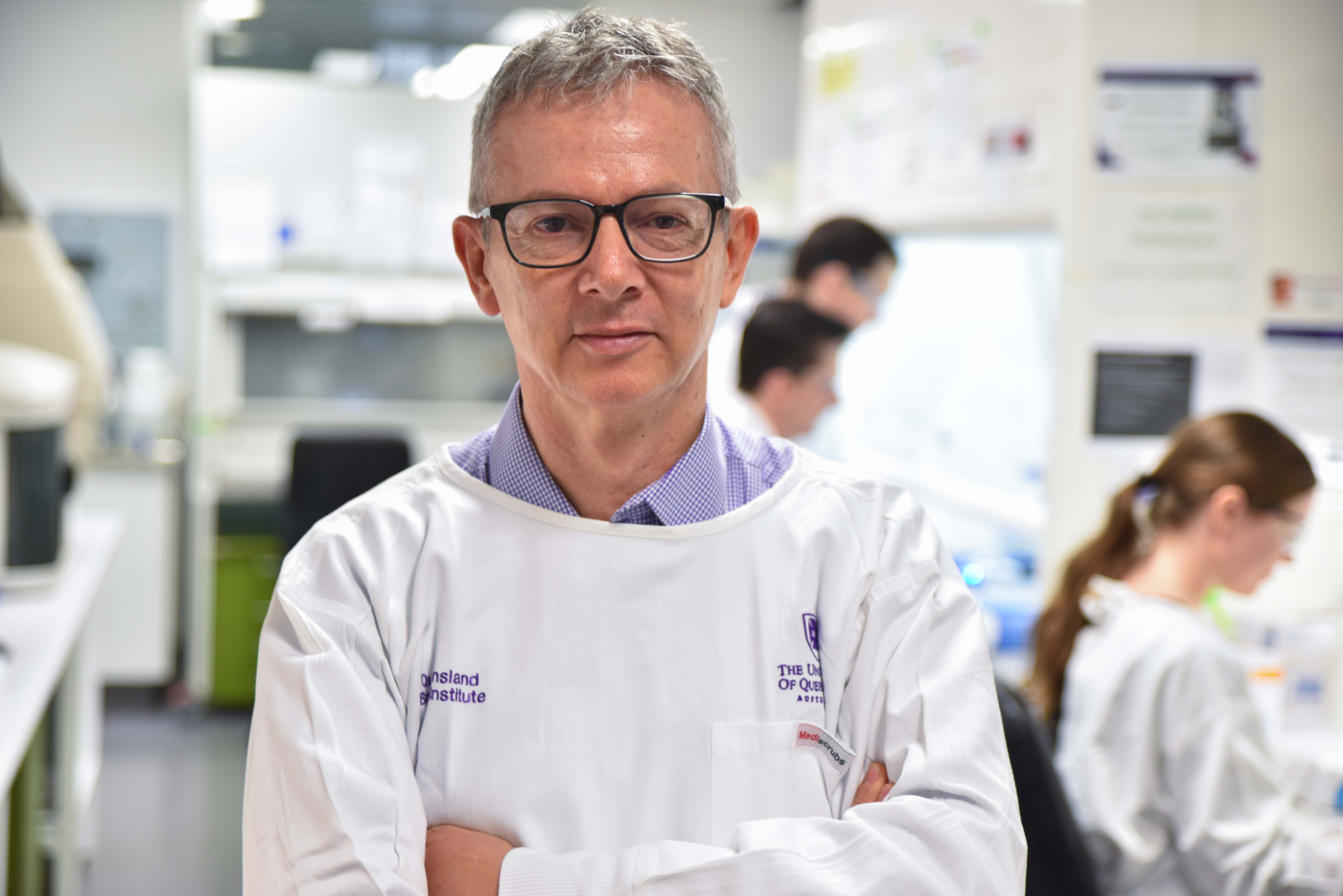
Group leader

Professor Jurgen Götz
NHMRC Leadership Fellow
Director of the Clem Jones Centre for Ageing Dementia Research (CJCADR)
Affiliate of Centre for Extracellular Vesicle Nanomedicine
Research approach
The Götz Lab, based at CJCADR, investigates the molecular and cellular basis of Alzheimer’s disease (AD) using a wide range of cellular, molecular, biochemical, histological, and behavioural techniques. The lab fosters an innovative research environment, advancing the emerging field of ultrasound-based therapies for neurodegenerative disease.
Therapeutic ultrasound
The lab investigates low-intensity ultrasound's effect on BBB dynamics at a cellular and molecular level and neuromodulation mechanism, to assess its potential to enhance drug delivery and restore brain function in AD.
Tau and Alzheimer’s therapeutics
The lab study the mechanisms of tau propagation, including the role of exosomes in disease spread, and develops tau-targeting antibodies. A key focus is understanding how these therapeutics function, particularly in combination with ultrasound, to improve treatment outcomes.
Neurodegeneration, glia, and protein synthesis
The lab's work examines glial biology in health and disease, including the role of Tyrobp signalling and protein synthesis in glial cells using click chemistry. These studies provide insight into how non-neuronal cells contribute to neurodegeneration and brain function.
Synapses, plasticity, and brain microstructure
Using super-resolution microscopy and advanced imaging, we investigate synaptic dysfunction, perineuronal nets, and brain plasticity in Alzheimer’s disease. Our goal is to identify mechanisms that can restore cognitive function and neural connectivity.
Models and technology development
We develop CRISPR-engineered and transgenic mouse models to study disease mechanisms and test therapies. These models, combined with cutting-edge techniques, enable precise investigation of Alzheimer’s pathology and therapeutic strategies.
Latest news
- 16 December 2025
- 12 August 2024
- 18 December 2023
Pages
Latest media
Professor Jürgen Martin Götz FAA FAHMS – New Fellow of the Australian Academy of Science
Ultrasound therapy shows promise as a treatment for Alzheimer’s disease