
Every day, our skin quietly helps keep us alive.
It tells us whether a room is too cold, whether bathwater is too hot, or whether a child may have a fever. But temperature sensing is more than a feeling. For humans and other warm-blooded organisms, maintaining a stable body temperature is essential for survival.
Now, researchers from Queensland Brain Institute (QBI) at The University of Queensland (UQ), have helped uncover a new clue about how the skin detects harmless warmth and cool, and the finding may change how scientists think about temperature sensation.
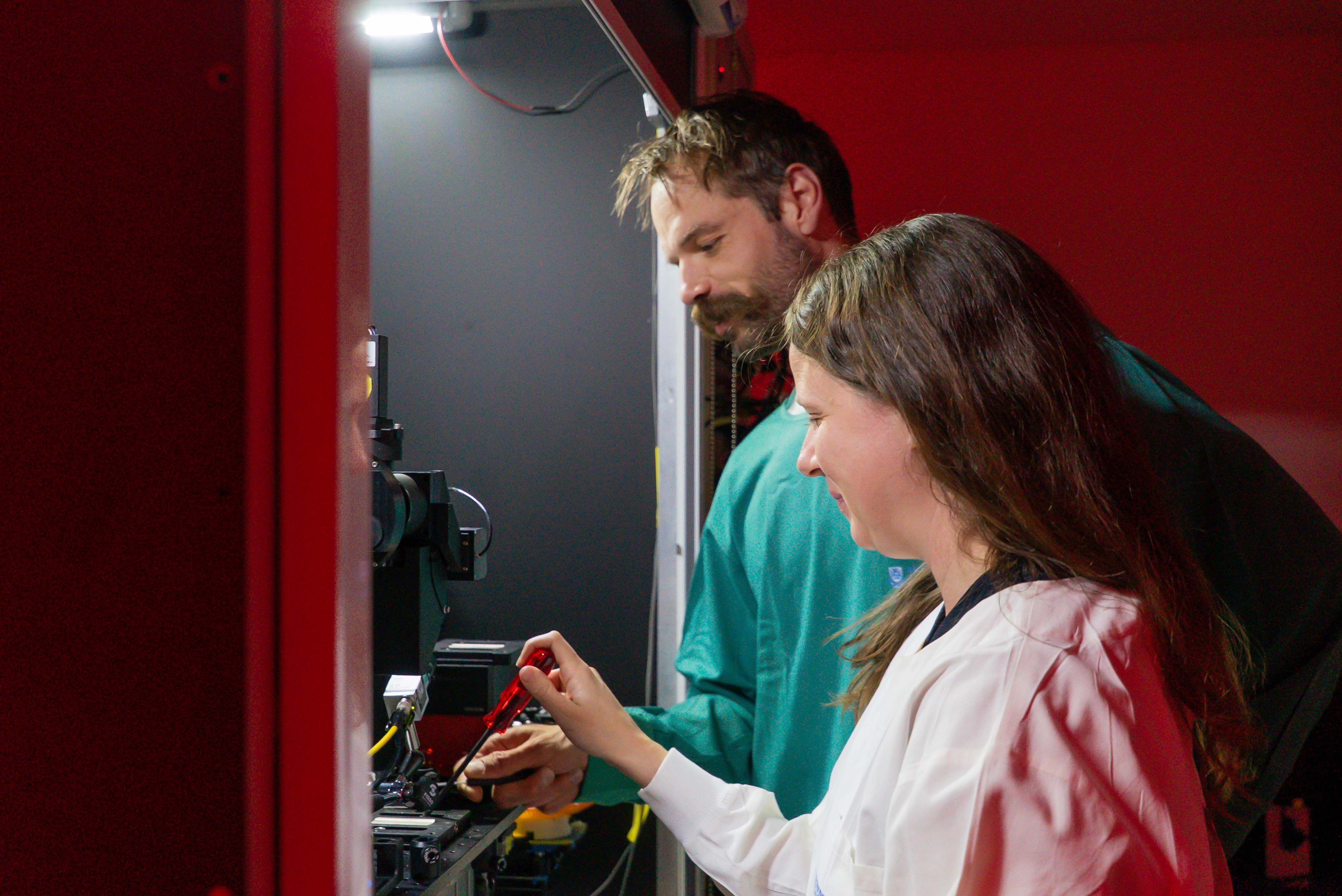
Dr Clarissa Whitmire and Dr Phillip Bokiniec studied specialised nerve cells called thermoreceptors, which sit in the skin and respond to temperature. Using advanced imaging in mice, the team tracked how thousands of these cells responded to carefully controlled cooling and warming.
They found that the skin may not rely on completely separate “cool” and “warm” sensors after all.
Many cells previously thought of as cool sensors also helped signal warmth - not by becoming more active, but by quietening down. When the skin cooled, these thermoreceptors switched on. When the skin warmed, many of them switched off.
“For a long time, the field has treated cooling and warming as two separate pathways,” Dr Whitmire said.
“What we are seeing is closer to one-pedal driving in an electric vehicle. The same system can signal different states depending on whether its activity increases or decreases.”
The study focuses on innocuous temperature - the everyday, non-painful range we experience constantly.
While much research in the field has focused on pain, Dr Bokiniec said ordinary temperature sensing is critical to homeostasis: the body’s ability to maintain a stable internal environment.
“As organisms that regulate our body temperature, having an accurate sense of environmental temperature is critical to staying alive,” Dr Bokiniec said.
“Most of the temperatures we deal with every day are not painful. They are ordinary temperatures such as feeling whether a room is cool, whether bathwater is warm, or whether your child has a fever.”
In contrast to other sensory systems such as vision or audition, the researchers also found that these thermoreceptors encoded absolute temperature i.e. the actual temperature reached, rather than simply whether the skin was getting warmer or cooler. That matters because the body needs to know not just that conditions are changing, but whether the surrounding temperature is safe.
The findings could help researchers better understand what happens when temperature sensing is disrupted. People with spinal cord injury, multiple sclerosis, diabetes or peripheral neuropathy can lose aspects of thermal sensation, making it harder to respond to environmental temperature changes.

Mouse lumbar dorsal root ganglion containing primary sensory neurons that innervate the hindlimb. Distinct neuronal populations are identified using multiple molecular markers; among these are neurons involved in temperature sensation.
Ageing is another major concern.
Older people are particularly vulnerable during heatwaves, and impaired sensory feedback from the skin may be one reason they struggle to regulate body temperature.
“We know that with ageing, people lose aspects of sensation,” Dr Whitmire said.
“What we’d like to do next is track these cells across the lifespan and ask when they stop functioning as they should.”
For Dr Whitmire, the work also points to a bigger question about the relationship between the body and brain.
“A lot of neuroscience focuses on the brain, but the brain evolved to control the body,” she said.
“If the brain is not receiving the right sensory inputs, that can have major consequences.”
The study suggests the skin is not simply a covering or a touch sensor, but a sophisticated interface with the world, one that is constantly measuring temperature and helping the body stay within the narrow range it needs to function.
And so it seems, the feeling of warmth may begin with the quietening of cold.
This research was published in Neuron.
Read the UQ media release here.


