
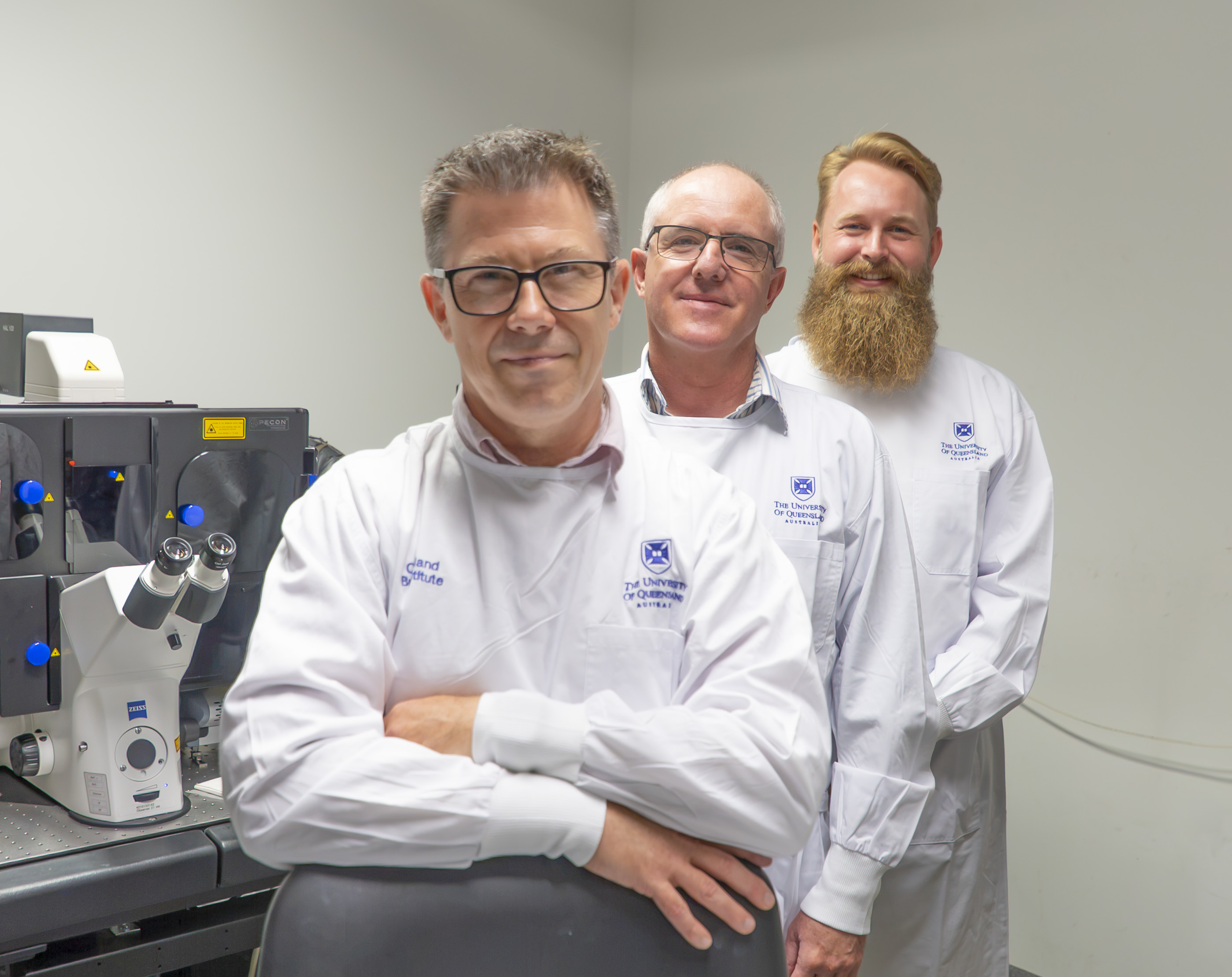
A technology developed at The University of Queensland allowing scientists to observe how disease-related proteins behave inside living neurons will be used to advance early drug discovery for neurodegenerative diseases.
The NASTIC (Nanoscale Spatiotemporal Indexing Clustering) platform, spun out into Brisbane-based startup Accretion Bio, enables researchers to study real-time biological processes in living cells across space and time at the single-molecule level for the first time.
The platform is the result of more than two decades of research at UQ's Queensland Brain Institute (QBI). Project lead Professor Frederic Meunier and QBI colleague Dr Tristan Wallis have observed proteins forming tiny, temporary clusters before dispersing again
Professor Meunier said NASTIC emerged from a fundamental scientific question about how proteins behave in living brain cells.
“NASTIC allows us to track how key proteins move, cluster and interact inside living neurons and observe how potential drug candidates influence those behaviours,” Professor Meunier said.
“It provides an unprecedented view of what happens as diseases such as Alzheimer's and Parkinson's progress.”
Read the media release here.


