
A tiny cluster of neurons deep in the brain could help researchers understand how we pay attention, and what happens when the systems that keep us alert are disrupted.
Dr Itia Favre-Bulle, from The University of Queensland’s Queensland Brain Institute (QBI) is investigating the locus coeruleus, a small structure in the brainstem with connections reaching across much of the brain.
Her recently awarded Australian Research Council (ARC) Future Fellowship will support the project Small nucleus, broad influence: the locus coeruleus in brain states, using advanced microscopy to explore how this region communicates with the rest of the brain.
The locus coeruleus is a major source of noradrenaline, a chemical messenger that helps regulate wakefulness, attention and responses to stress. It forms a central part of the noradrenergic system, a network that influences how alert we are and how we respond to the world around us.
For Dr Favre-Bulle, the way our awareness changes with our level of alertness is a source of fascination.
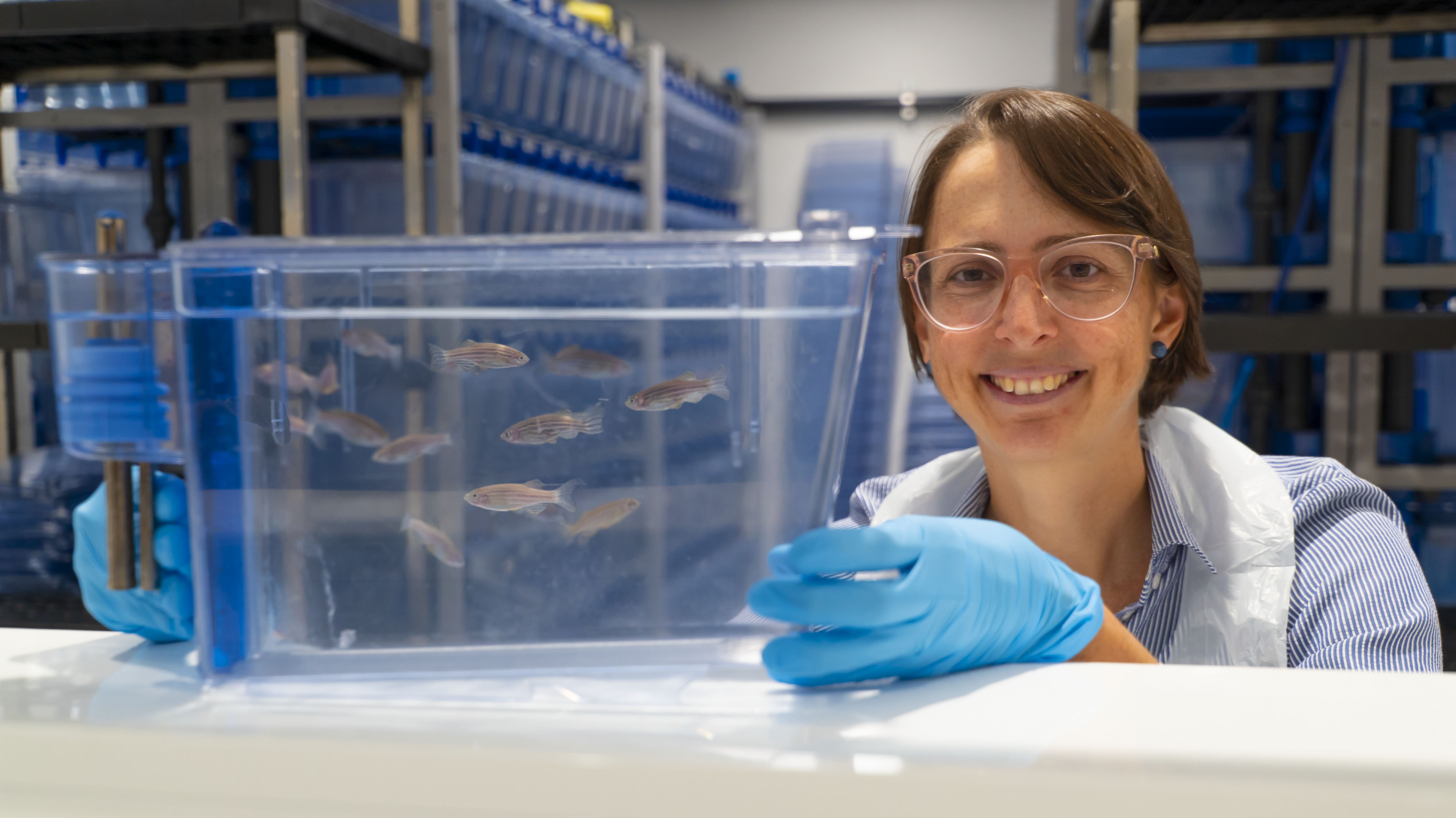
“Depending on how attentive you are, you hear more things or miss them altogether,” Dr Favre-Bulle said.
“If you’re little more aware or a little bit more awake, then suddenly you hear more things, see more things and even have more ideas.”
Understanding this system could shed light on attention difficulties and mental health.
Changes in noradrenaline signalling have been associated with conditions including attention deficit hyperactivity disorder (ADHD) and anxiety, although the precise role of the locus coeruleus remains an active area of research.
Tracking brain states through zebrafish
Dr Favre-Bulle is approaching these questions through young zebrafish, which share key brain signalling systems with humans and can be genetically modified to reveal and manipulate these systems.
Their small brains allow researchers to record activity across the brain at the level of individual cells, revealing how different regions of the brain respond together.
The work brings together Dr Favre-Bulle’s training as an optical physicist and her growing interest in attention.
“I come from the optics and photonics world, and I wanted to know how light was interacting with the brain,” she said.
After joining QBI in 2020, she studied how light scatters through brain tissue. She later used optical tweezers, which apply force using focused light, to investigate how zebrafish sense light, as well as movement and sound through their inner ears.
In a study published in the Journal of Neuroscience in 2025, Dr Favre-Bulle and colleagues used this approach to examine how a sedative that acts on noradrenaline signalling changed brain activity and responses to sound.
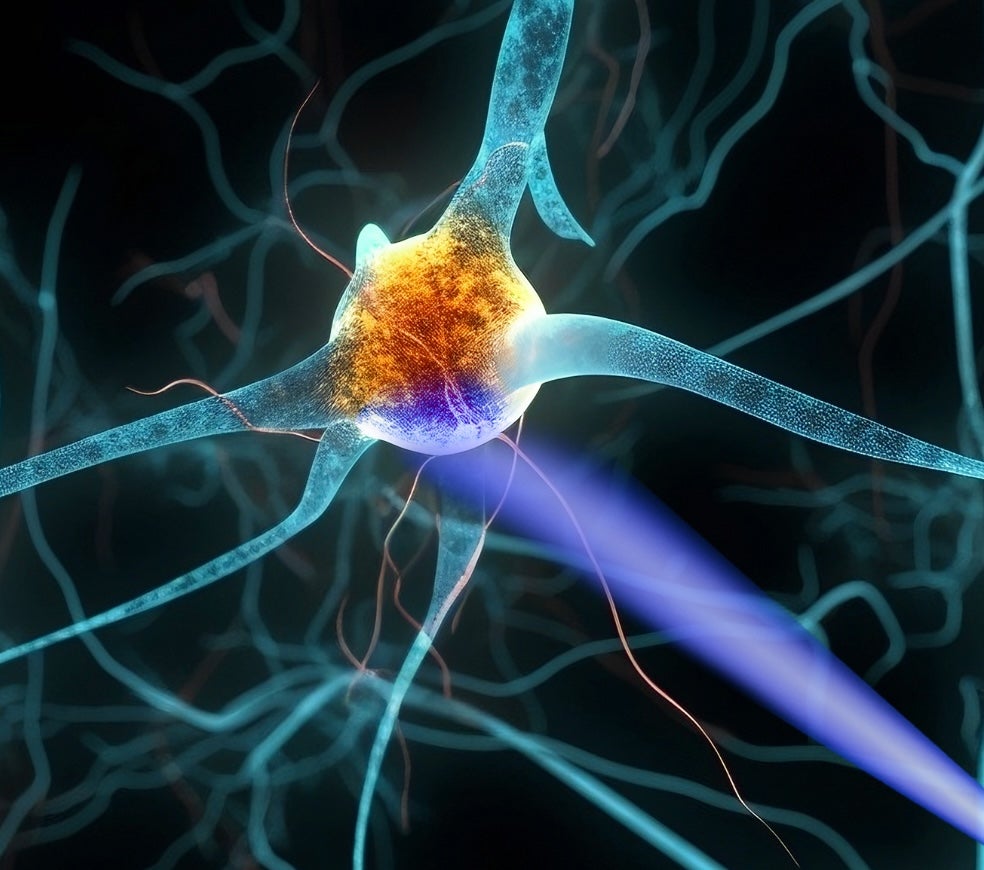
Sedation reduced spontaneous activity and made the brain less likely to shift between states.
Against this quieter background, neural responses to sound stood out more clearly but sound-related activity also faded more quickly.
These findings provide a foundation for investigating how changes in brain state influence the processing of sensory information.
Her next questions centre on how the noradrenergic system functions naturally and how changing its activity affects the wider brain.
The fellowship will support precisely targeted techniques including the 2026 Nobel Prize-winning optogenetics, which enables researchers to precisely control the activity of specific brain cells using light to uncover how neural circuits shape behaviour.


