
New tests using blurry pictures and hidden numbers have revealed visual processing difficulties in some people with Parkinson’s disease before they report wider problems with thinking, University of Queensland research has found.
Professor Peter Nestor from UQ’s Queensland Brain Institute (QBI) said the findings could have a substantial impact on how the world understands Lewy body dementia.
Lewy body dementia (LBD) is the second most common dementia type and is an umbrella term for Parkinson’s disease, including Parkinson’s disease dementia (PDD) and dementia with Lewy bodies.
This dementia is characterised by problems with visual perception however research into Parkinson’s disease has often focused on brain circuits involved in movement, located in the frontal and deep brain structures.
“In Parkinson’s disease, the movement disorder arises because of a lack of a transmitter called dopamine which is working on circuits in the frontal cortex and basal ganglia structures of the brain,” said Professor Nestor.
“Now because that circuit is what causes the movement disorder, people have often assumed that if you get dementia it’s also because of this circuit, but when people develop dementia, the abnormal function in Parkinson’s we see is at the back of the brain, in those regions that process visual information.”
That led Professor Nestor from QBI’s Clem Jones Centre for Ageing and Dementia Research (CJCADR) to spend more than a decade developing tests for the visual pathways that begin at the back of the brain: one that helps us understand where things are in space, while the other helps us recognise what objects we are looking at.
In a new paper published in the Journal of Neurology, Dr Emily McCann, Professor Nestor and colleagues invented novel tests designed to be sensitive to the earliest signs of visuoperceptual dysfunction.
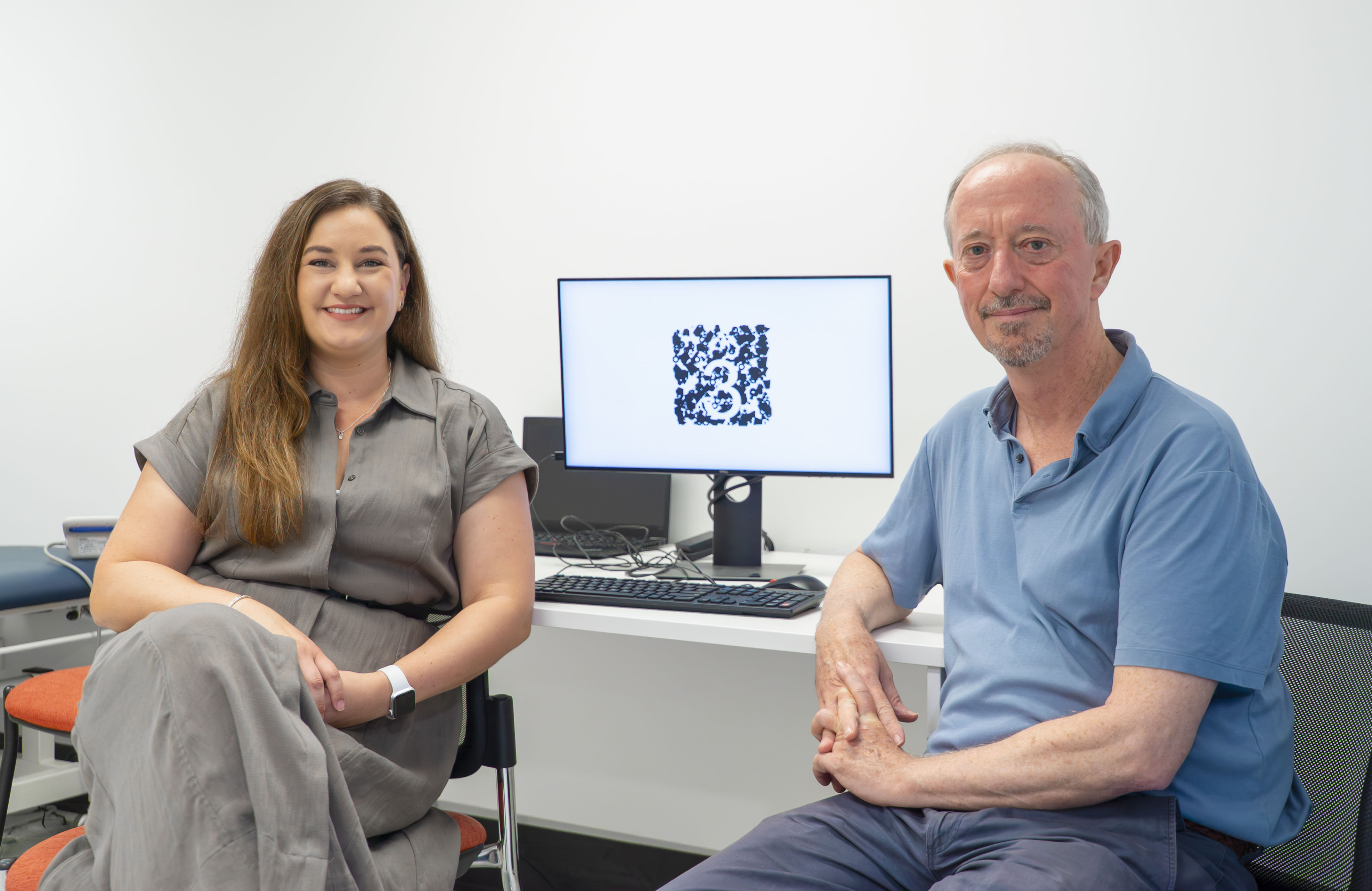
In the first test, participants searched for numbers hidden in a pattern of dots to assess spatial processing. A second test, using pictures that gradually became less blurry, assessed object recognition.
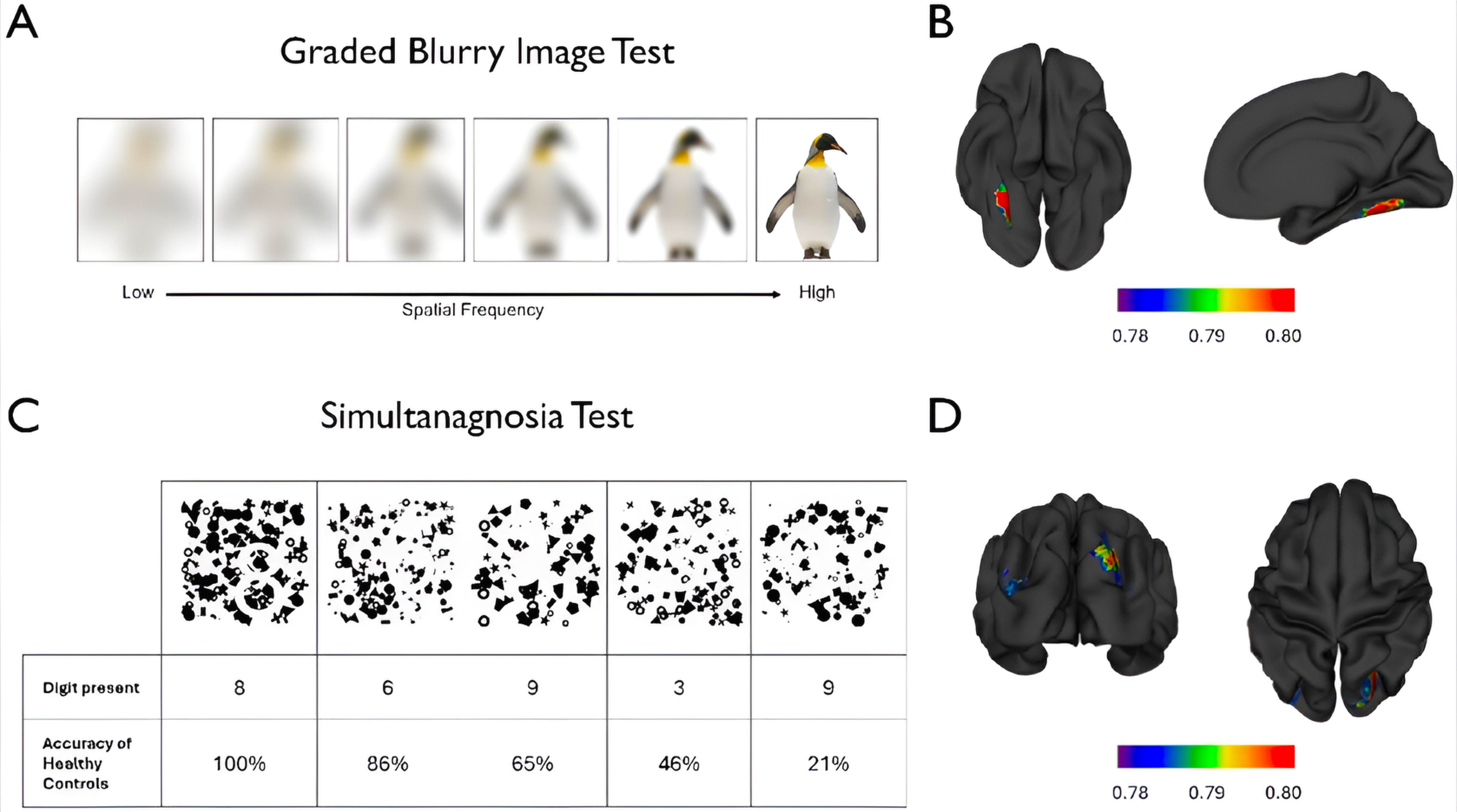
“Existing visual tests tend to be too easy and so can miss mild changes,” Professor Nestor said.
“The trick was making tests that even the healthy population could not do perfectly so that when deficits first emerged we would be sensitive to detecting them.”
The team tested 53 people with Lewy body disease, including 27 with Parkinson’s who had no recognised cognitive symptoms. Their results were compared with those of 29 people with Alzheimer’s disease and 54 healthy adults.
People with Lewy body dementia had marked difficulty on both tests. More than half of the Parkinson’s group without recognised cognitive symptoms scored in the impaired range on at least one test.
The pattern was different in Alzheimer’s disease. At milder stages, people with Alzheimer’s tended to have more difficulty with spatial processing, while object recognition only became impaired at more advanced disease stages.
People with Lewy body disease who had experienced visual hallucination also performed substantially worse on both tests than those who had not.
“Hallucinations have often been referred to as a risk factor for dementia, but our findings suggest they are a sign of the dementia itself,” Professor Nestor said.
The test could also support earlier, more accurate diagnosis of dementia with Lewy bodies, helping clinicians tailor treatments and care to each person’s condition.
“We are already seeing in our clinic that these tests are useful in separating the Parkinson’s disease family that are defined by the presence Lewy bodies in the brain, from other diseases that are frequently confused with Parkinson’s,” Professor Nestor said.
The research was conducted with the support of the Mater Foundation.
Read the media release here.


