
Key findings
- Perineuronal nets (PNNs) help keep the hippocampus and retrosplenial cortex synchronised during memory recall.
- Removing PNNs disrupts brain rhythms and weakens communication between these memory regions.
- Disrupted communication impairs the ability to recall spatial memories.
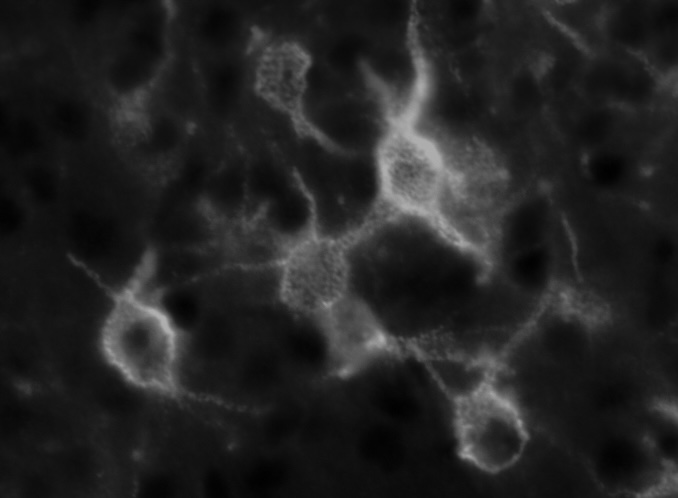
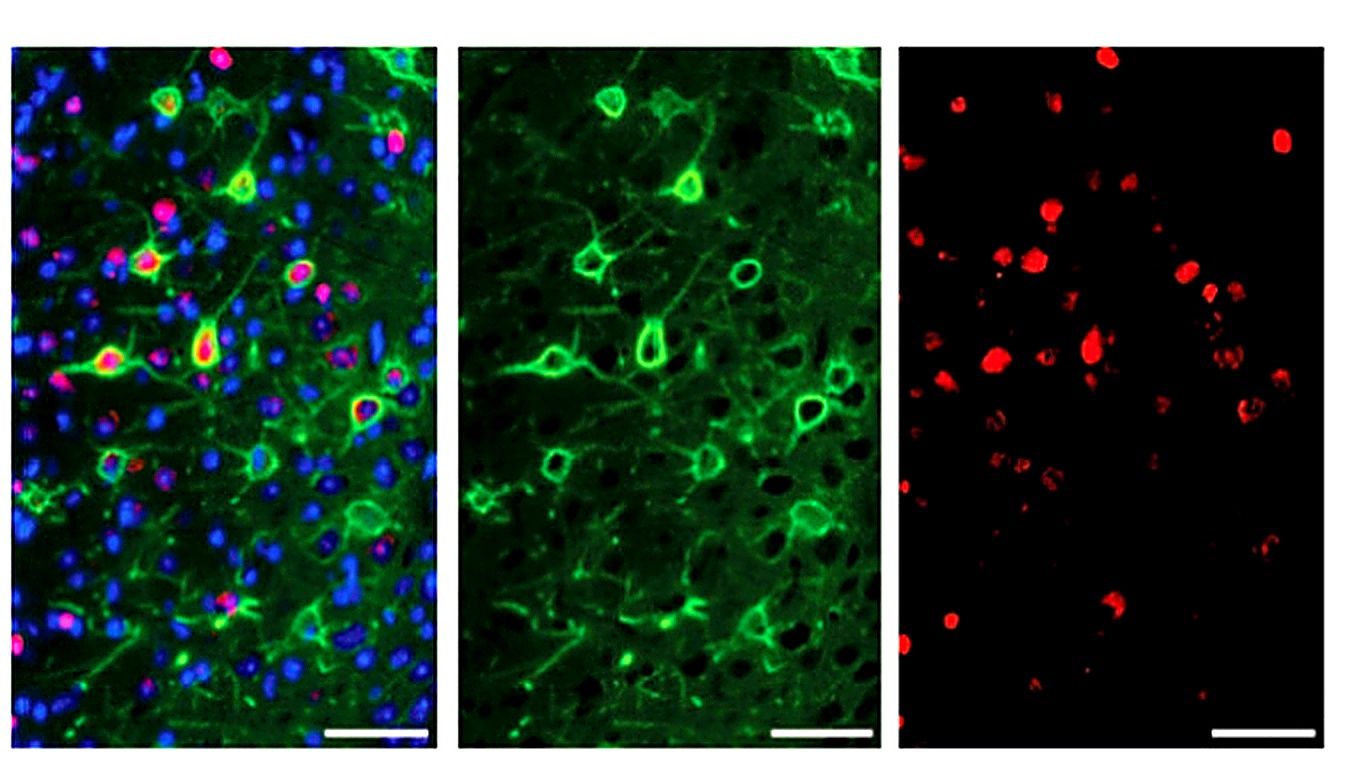
Researchers from UQ's Queensland Brain Institute have discovered that perineuronal nets (PNNs), microscopic mesh-like structures that surround neurons, are essential for maintaining communication between brain regions required for memory recall.
Dr Matilde Balbi explained the team investigated how the hippocampus and retrosplenial cortex (RSC), two brain regions essential for spatial memory (our ability to remember places and navigate the world), remain synchronised when memories are recalled.
“They found that PNNs are much more than passive structural supports – they are critical for preserving the timing and coordination of neural activity in the RSC and across the broader memory network,” Dr Balbi said.
For the lead post doc, Dr Phoebe Hawthorn, the findings represents eight years of research.
"This work began during my PhD, and grew through collaborations spanning behaviour, histology, electrophysiology, and neural network analyses,” Dr Hawthorn said.
“It's incredible to see how discoveries at the microscopic level can influence communication across entire brain networks and ultimately affect how memories are recalled."
When Dr Hawthorn selectively removed PNNs from the RSC in animal models, the animals showed impaired spatial memory recall. Although neuronal activity increased, it became less organised and less effective at supporting coordinated brain activity.
The team also found that brain rhythms essential for memory processing, including theta and gamma oscillations and their interaction, were significantly reduced.
Dr Balbi said the findings demonstrate that memory depends on coordinated activity across distributed brain networks.
"Memory is not stored or recalled by a single brain region in isolation," Dr Balbi said.
"It depends on coordinated activity across distributed networks. The team’s work shows that PNNs are key to maintaining that communication."
Understanding how this kind of coordinated signalling breaks down may help scientists better understand neurological conditions where memory is affected.
This research is published in Cell Reports.


