
Queensland company Intracellica Bio has been awarded more than $1.6 million in government funding through CUREator+ Dementia & Cognitive Decline to develop antibodies that can enter neurons and target the toxic Tau protein linked to Alzheimer’s disease.
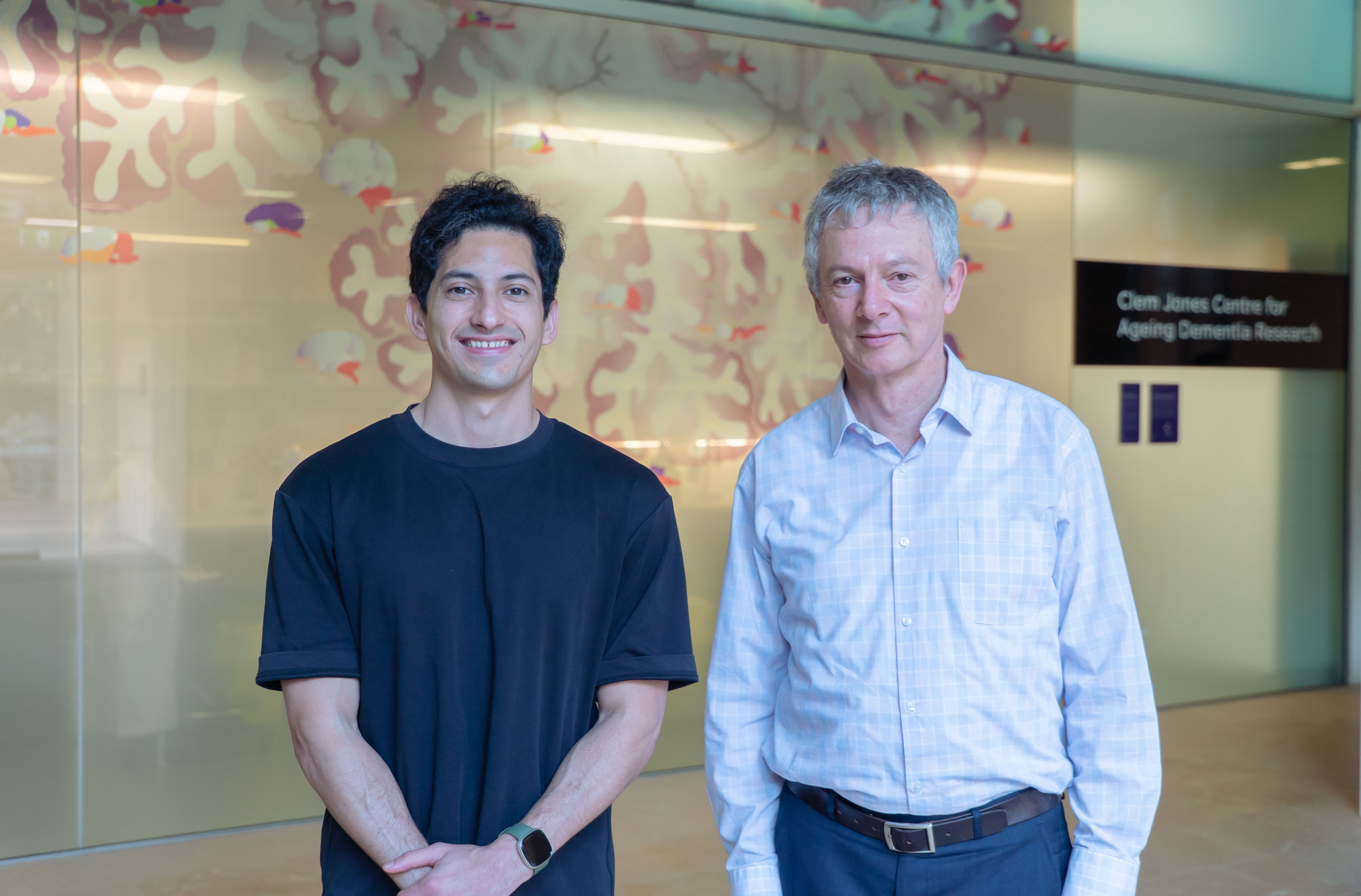
The research team is led by UQ’s Queensland Brain Institute (QBI) neuroscientist Professor Jürgen Götz, Director of QBI’s Clem Jones Centre for Ageing Dementia Research and lead principal investigator on the project.
Professor Götz said antibodies must overcome two major barriers: crossing the blood-brain barrier and then entering neurons, where most disease-driving Tau is found.
“We already have focused ultrasound technology to help antibodies cross the blood-brain barrier,” Professor Götz said.
“The next challenge is to engineer the antibodies so they can enter neurons and reach Tau.”
Tau normally helps maintain the structure and transport system of neurons. However, in Alzheimer’s disease, abnormal Tau accumulates and forms tangles that disrupt cell function.
QBI researcher and co-lead Dr Esteban Cruz, working alongside Professor Götz on the project, is modifying Tau-targeting antibodies by fusing them with proteins designed to help them cross the membrane surrounding each neuron.
“We are using antibodies as the starting point and adding capabilities that may help them reach disease-causing Tau inside neurons,” Dr Cruz said.
Funded by the Australian Government through the Medical Research Future Fund, CUREator+ Dementia & Cognitive Decline is delivered by Brandon BioCatalyst in partnership with ANDHealth and Dementia Australia.
The funding will support milestone-based testing of improved cellular uptake of the modified antibodies in cells and mice. The team will further assess whether the engineered antibody can reduce Tau pathology and improve behaviour in mice. They will also investigate how it moves through and is cleared by the body, generating evidence to support its future development.
Unlike treatments that broadly reduce Tau production, engineered antibodies may be able to target harmful forms of Tau while preserving the protein’s healthy functions. The platform could potentially be adapted to target proteins involved in other Tau-related dementias, motor neurone disease, and Huntington’s disease.
“Tau remains a challenging target, but this project gives us a rigorous way to test whether engineered antibodies can reach it inside neurons and reduce disease,” Professor Götz said.
“A successful proof of concept could open a new direction for treating Alzheimer’s disease and other neurodegenerative conditions.”
Dr Cruz would like to acknowledge the support of the Clem Jones Charitable Trust in advancing this research.
Read the UQ media release here.


