
A molecule that helps the body respond to injury and infection may also play a key role in some of the most complex brain diseases.
In a new review published in Trends in Neurosciences, researchers from the University of Queensland (UQ) highlight how the immune signalling molecule interleukin-6 (IL-6) can have both protective and harmful effects in the brain, depending on how it sends its message.
Dr John Lee from UQ’s Queensland Brain Institute (QBI) explained IL-6 has often been viewed as a single inflammatory pathway, but this latest scientific review shows that the biology is far more nuanced.
"The same molecule can support repair in one context and drive damaging inflammation in another,” he said.
"The goal isn't to eliminate inflammation, but to understand when inflammation becomes harmful and target those specific processes while preserving the brain's natural repair mechanisms."
IL-6 communicates through two distinct signalling routes. The first, known as classical signalling, is limited to specific cell types and is generally associated with immune regulation, tissue maintenance and repair. The second, called trans-signalling, allows IL-6 to influence a much broader range of cells and is increasingly linked to chronic inflammation.
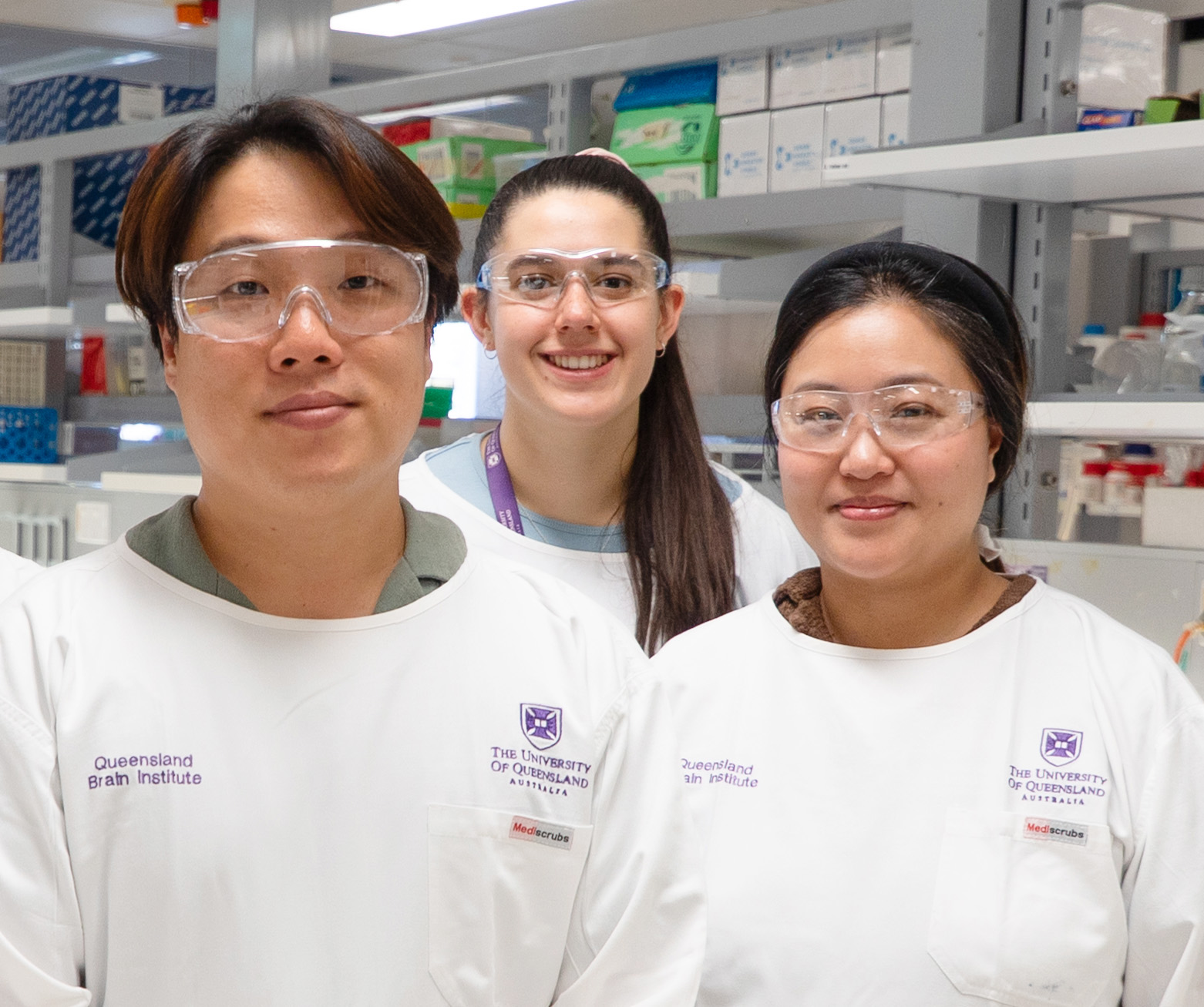
QBI PhD candidate, Ms Grace Risby-Jones in the Lee lab, led the review, alongside Dr Jenny Fung from UQ’s School of Biomedical Sciences.
Ms Risby-Jones said the review suggested that excessive trans-signalling may act as a common inflammatory mechanism across several neurological conditions, including motor neurone disease (MND/ALS), Alzheimer's disease, Parkinson's disease, Huntington's disease and multiple sclerosis.
“Studies indicate this pathway can amplify the activity of microglia and astrocytes, disrupt the blood-brain barrier and sustain inflammation that contributes to disease progression,” she said.
“Importantly, measuring IL-6 levels alone may not be the only indicator. Markers of trans-signalling activity, such as soluble IL-6 receptors, may provide a clearer picture of harmful inflammation within the brain.”

Dr Lee said the findings could also influence future treatments.
“One promising candidate is the experimental drug olamkicept (sgp130Fc), which targets the trans-signalling pathway without shutting down IL-6 activity altogether,” he said.
“These newer approaches aim to selectively inhibit trans-signalling while preserving its protective effects.
“The next challenge is determining when trans-signalling becomes damaging, which patients are most affected, and whether selectively blocking the pathway can slow the progression of neurodegenerative disease.”
The review also points to a future where precision targeting of inflammation may prove more effective than simply switching it off.


