
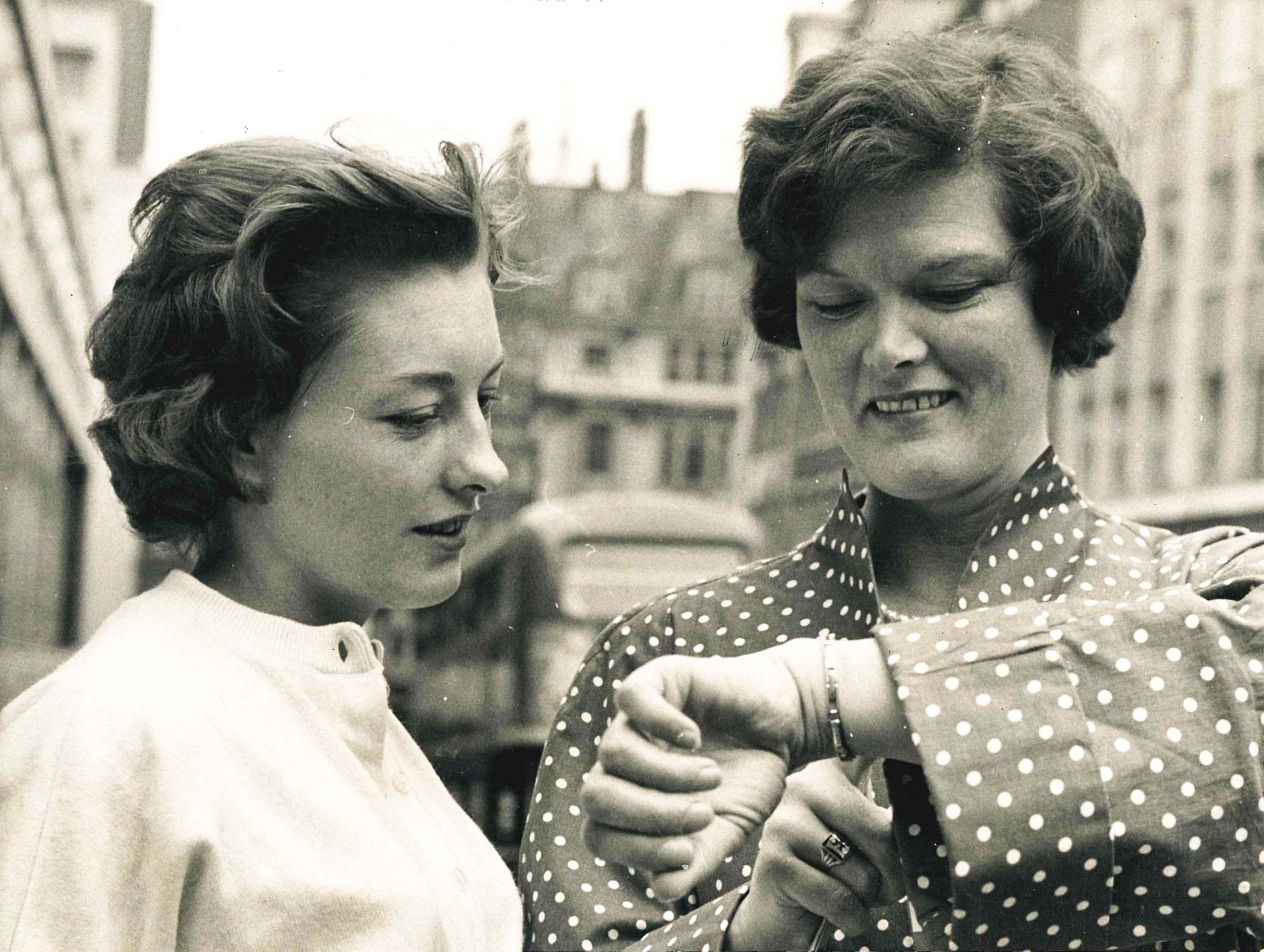
In a black-and-white photograph from 1961, Edna Downing stands on the right, glancing down at her watch. It is a fleeting, everyday moment, one preserved across more than six decades.
Today, the image offers our only glimpse of a woman whose bequest to the Queensland Brain Institute (QBI) was shaped by a long life, an enduring marriage and a hope for a future in which dementia can be treated.
Born in England in May 1924, Edna's earliest years were marked by upheaval. She spent part of her childhood in an orphanage and later lived in a foster home. At 17, she joined the Women's Auxiliary Air Force, entering wartime service while still in her teens.
The surviving details form only a vague outline, but they trace a life repeatedly remade: from an unsettled childhood in England to wartime service, and then across oceans to new homes. For several years during the 1960s, Edna lived in New Zealand before she later moved to Australia, where she married Peter Downing in 1975.
Edna and Peter had no children but together they built a marriage that would last for almost half a century.
By around 2022, the couple were residents of Estia Aged Care at Mount Coolum. Peter was living with advanced dementia. For Edna, the disease was no longer an abstract medical condition. It had become part of the daily reality she and Peter shared in the final years of their lives together.
Ray Barber, executor of Edna's estate, believes Peter's experience of dementia was the reason Edna chose to leave a bequest to the QBI. He is certain that she wanted her gift to be directed towards dementia research.
Her decision was deeply personal, but its reach extends beyond one couple. Dementia can change memory, thinking, independence and relationships, affecting not only the person diagnosed but also those closest to them. Research is essential to understanding how the diseases that cause dementia begin and progress, and to finding better ways to prevent, diagnose and treat them.
Bequests have a distinctive place in that work. They allow one generation to invest in discoveries that may transform life for the next. They can give researchers the freedom to follow the science, to ask difficult questions and follow promising leads.
For Edna, supporting dementia research was more than an act of philanthropy. It was a response to what she witnessed as Peter's condition progressed, compassionately intended to help families she will never know.


