
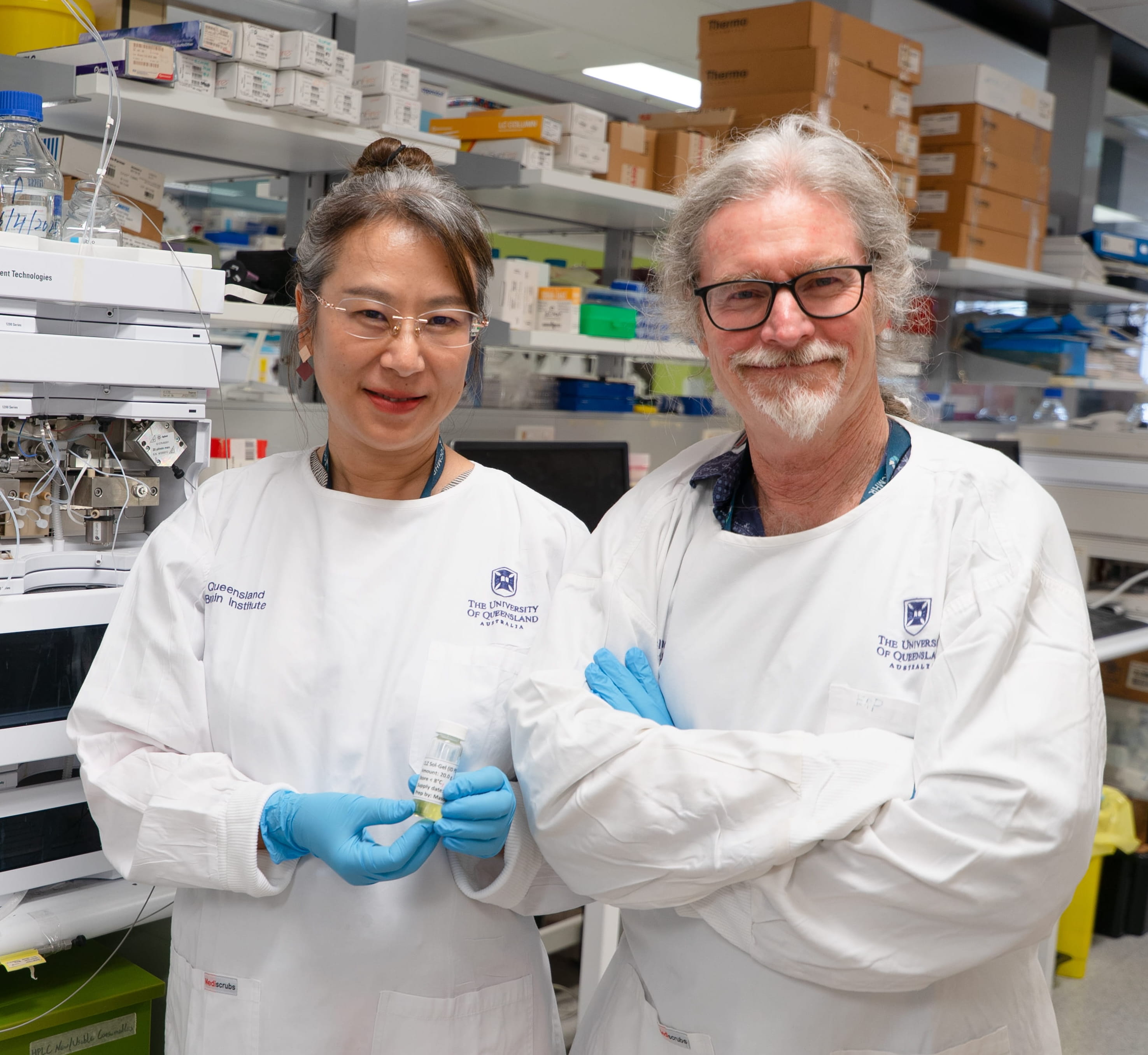
A University of Queensland (UQ) research team has developed a novel intranasal formulation of clozapine that could transform the treatment of schizophrenia.
The research team, led by Professor Darryl Eyles at UQ’s Queensland Brain Institute, found that this new delivery method shows therapeutic benefits at significantly lower doses, potentially reducing the serious side effects of this medication.
“Our pre-clinical studies demonstrate that a thermoresponsive “sol–gel” formulation of clozapine, administered through the nose, can achieve antipsychotic effects at a fraction of the standard oral dose,” Professor Eyles said.
“Thermoresponsive means the drug carrier is designed to change from a liquid to a watery gel (like weak jelly) when it warms to body temperature, helping the medication to stay in place, releasing into the brain slowly and more effectively.”
Clozapine is widely regarded as the most effective treatment for treatment-resistant schizophrenia, but its clinical use is limited by substantial, and sometimes life-threatening, side effects.
Drawing on the clinical expertise of psychiatrist Professor Dan Siskind and the pharmaceutical expertise of Dr Harendra Parekh, the team addressed this challenge by devising and testing a more targeted delivery route to the brain.
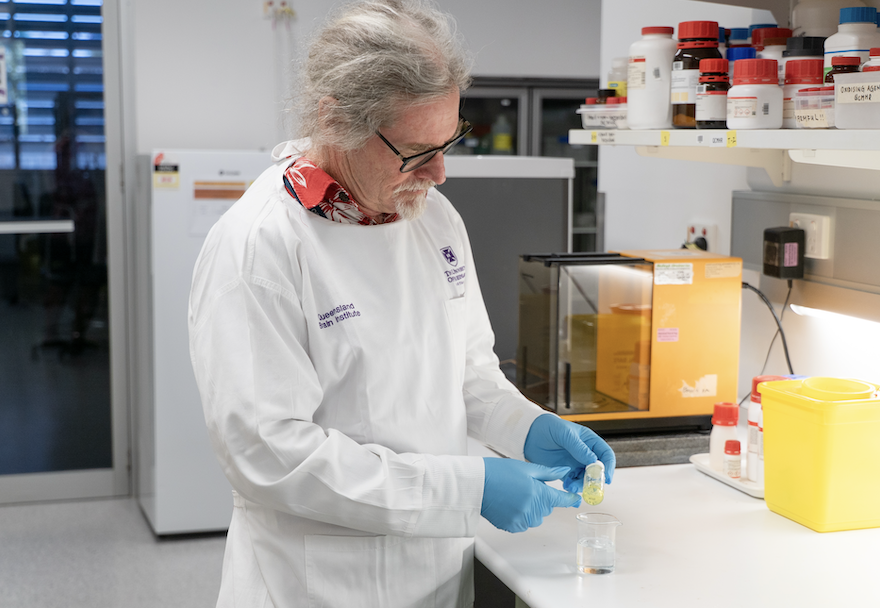
“By improving how clozapine is delivered, we may be able to retain its powerful therapeutic effects while minimising the burden of adverse side effects,” Professor Eyles explained.
“We found that when administered intranasally to rats, the new formulation achieved high concentrations of clozapine in the brain while significantly limiting its presence in the bloodstream.
“We also found that the nasal dose needed to achieve the same antipsychotic effect as oral clozapine was much lower – the intranasal formulation required only 3.5% of the amount given orally to achieve the same results.
“This research moves us closer to making clozapine safer and more accessible for patients with treatment-resistant schizophrenia.
“Further research, including clinical studies through The Queensland Centre for Mental Health Research, will be needed to confirm this approach’s safety, effectiveness, and long-term outcomes,” Professor Eyles said.
This research is published in Translational Psychiatry.
Professor Eyles' work is funded by The Queensland Centre for Mental Health Research.


