
A quiet legacy
When Terry Hopkins was diagnosed with early-onset Alzheimer’s disease in his mid-60s, it changed the course of life for him and his wife, Maureen. Today, their legacy is helping change the path of dementia research.
In 2018, the Terry and Maureen Hopkins Foundation was established with $6 million dedicated to supporting medical research into dementia and bowel cancer. The Foundation will operate until 2038, 20 years after Maureen’s passing, providing sustained support for scientific work aimed at better treatments.
To date, the Foundation has donated $800,000 to QBI’s Clem Jones Centre for Ageing Dementia Research to support research into new dementia therapies using therapeutic ultrasound.
The early years
Maureen was born in Cardiff, Wales, in 1938 and trained as a nurse at just 17. Her career took her to hospitals in Canada and the United States before she eventually settled in Sydney.
It was there, in 1967, that she met Terry. They married the following year, beginning a partnership that would span nearly five decades.
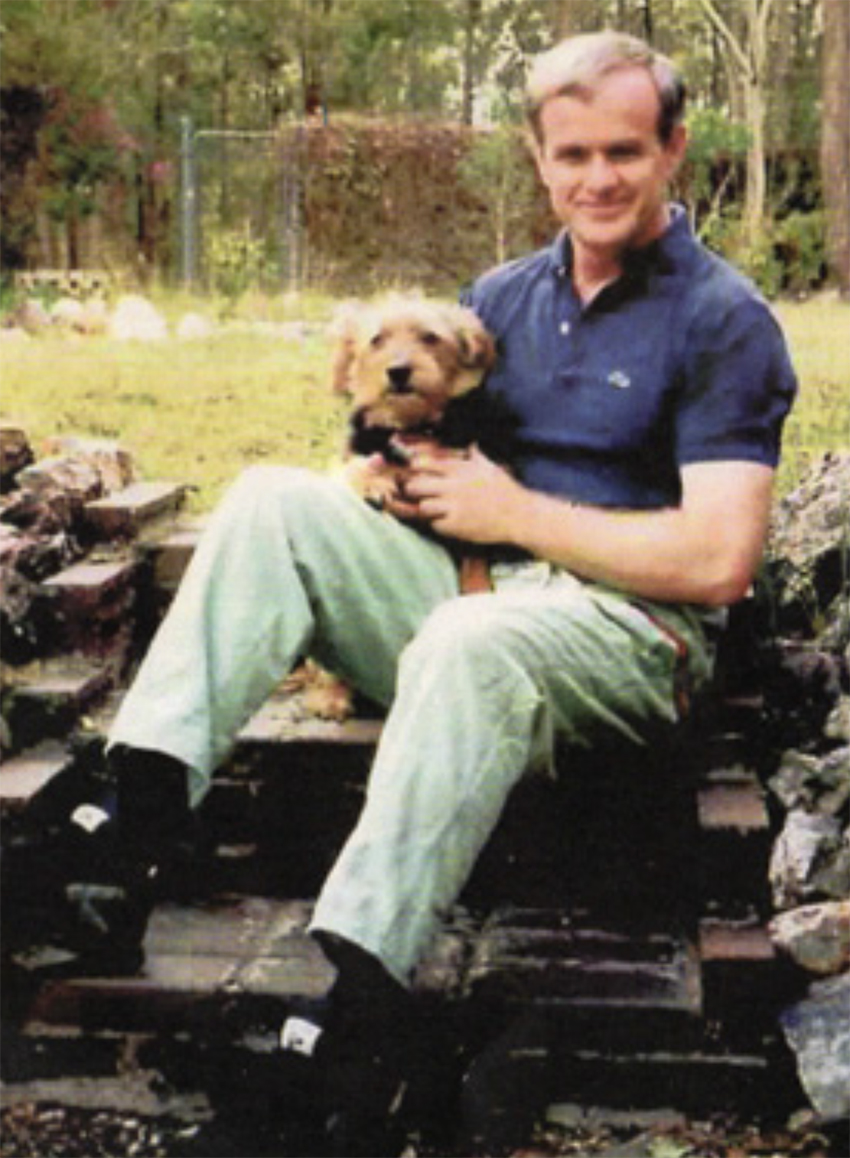
Terry began his career as a veterinarian before joining Bayer in 1972, where he spent three decades in animal pharmaceutical research. Colleagues remember him as persistent and quietly determined, qualities that helped lead to the development of veterinary treatments used worldwide, including the global flea treatment, Advantage.
Global success
“Terry was a very simple man and a very understated guy,” said Mark Barry, Gift Trustee of the Terry and Maureen Hopkins Foundation and the couple’s long-time financial adviser.
That determination was evident during the development of Advantage, when Terry resisted repeated pressure from overseas executives to abandon the project.
“They kept sending messages saying, ‘Tell that lunatic in Brisbane to stop wasting money on this thing,” recalled Mr Barry. “But Terry kept going, and after 21 clinical trials, it became one of Bayer’s most successful products.”
Despite the global success of his work, Terry remained quietly humble. Animals were central to the couple’s life, and they supported organisations such as the RSPCA for many years. Following Maureen’s death, Terry’s beloved dog, Juba, was cared for by the RSPCA. In recognition of Terry’s lifelong love of animals and his extraordinary commitment to their welfare, a special corner at RSPCA Wacol is named in Juba’s honour.

Lasting impact
For Maureen, the mission to set up a Foundation was deeply personal. Terry was diagnosed with Alzheimer’s disease in 2010 and as the condition progressed, he moved into care at Pinjarra Hills in Brisbane in 2013, where he remained until his passing in 2016.
After losing Terry, Maureen began reflecting on how she might turn their shared values into something lasting. She initially considered leaving her estate as a single gift to charity but ultimately chose to establish a Foundation so their legacy could support research over many years to come.
Maureen directed the Foundation’s funding toward dementia research in Terry’s memory and toward bowel cancer research in recognition of the disease that claimed Terry’s brother, Edward.
She died at the age of 80, but the Foundation she created ensures that their generosity continues to have lasting impact, helping drive the search for answers in dementia research and honouring the values they shared throughout their lives. QBI is deeply grateful for the support of Terry and Maureen Hopkins, whose legacy continues to make a meaningful contribution to the fight against this unrelenting condition.