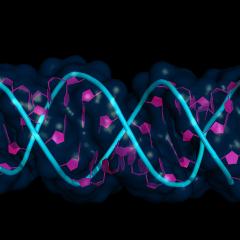
Fear-related learning, which often accompanies exposure to a traumatic event, is essential for survival. However, the same mechanisms that promote this beneficial response to threat can also lead to pathological memories and the development of phobia and/or post-traumatic stress disorder (PTSD). In contrast, fear extinction is an inhibitory learning process that is critical for overcoming traumatic memories. Although the neural circuitry driving this important form of learning has been well studied, the mechanisms governing fear extinction remain to be fully determined. A deeper understanding of the fundamental molecular machinery underlying experience-dependent gene expression is necessary if new approaches for the treatment of fear-related anxiety disorders are to be realised.
Our vision is to obtain a deeper understanding of the fundamental molecular mechanisms underlying fear-related learning and memory. Using animal models, we are currently seeking to uncover how DNA and RNA modification and specific forms of noncoding RNA are involved in learning, cellular function, and real-time brain adaptation. Ultimately, our long-term goal is to discover new molecular mechanisms that are necessary for the formation and stability of memory, and to reveal the potential of RNA-based therapeutics as an avenue toward the treatment of neuropsychiatric disorders characterised by cognitive impairment.
Our studies on the neuroepigenetic and RNA-based mechanisms of fear extinction have had broad impact by providing conclusive evidence that our genes do not necessarily dictate destiny, which has led to an evolved model of gene-environment interactions that recognises the fundamental capacity of the brain to adapt in real-time. This is a critical conceptual leap as it provides an inroad for the design of new therapies that specifically target epigenetic mechanisms and regulatory RNAs in the brain to correct, or even reverse, the trajectory of brain disorders traditionally assumed to have a genetic foundation.
Group leader

Professor Timothy Bredy
Group Leader, Cognitive neuroepigenetics
+61 7 3343 3005
t.bredy@uq.edu.au
UQ Researcher Profile
@TWBredy
@RNAinNeuro
Discovering new molecular contributors to Prader-Willi syndrome
(2022–2023) Prader Willi Syndrome Research Grant
Dynamic DNA structure states and memory formation
(2021–2024) ARC Discovery Projects
Long noncoding RNA in space and time, and the regulation of fear extinction
(2021–2024) NHMRC IDEAS Grants
RNA modifications in space and time: How do they govern fear extinction?
(2020–2023) NHMRC IDEAS Grants
Defining novel neuroepigenetic pathways that influence learning and memory
(2019–2022) ARC Discovery Projects
Toward a deeper understanding of new DNA modifications in fear-related learning.
(2019–2022) NHMRC Project Grant
Cracking the epigenetic code: understanding the mechanisms of memory associated with anxiety-related disorders and their treatment
(2018–2022) NHMRC Research Fellowship
Madugalle, Sachithrani U., Liau, Wei-Siang, Zhao, Qiongyi, Li, Xiang, Gong, Hao, Marshall, Paul R., Periyakaruppiah, Ambika, Zajaczkowski, Esmi L., Leighton, Laura J., Ren, Haobin, Musgrove, Mason R. B., Davies, Joshua W. A., Kim, Gwangmin, Rauch, Simone, He, Chuan, Dickinson, Bryan C., Fulopova, Barbora, Fletcher, Lee N., Williams, Stephen R., Spitale, Robert C. and Bredy, Timothy W. (2023). Synapse-enriched m6A-modified Malat1 interacts with the novel m6A reader, DPYSL2, and is required for fear-extinction memory. The Journal of Neuroscience, JN-RM. doi: 10.1523/jneurosci.0943-23.2023
Localised Cdr1as activity is required for fear extinction memory
Lau Zajaczkowski, Esmi, Zhao, Qiongyi, Liau, Wei-Siang, Gong, Hao, Umanda Madugalle, Sachithrani, Periyakaruppiah, Ambika, Jane Leighton, Laura, Musgrove, Mason, Ren, Haobin, Davies, Joshua, Robert Marshall, Paul and William Bredy, Timothy (2023). Localised Cdr1as activity is required for fear extinction memory. Neurobiology of Learning and Memory, 203 107777, 107777. doi: 10.1016/j.nlm.2023.107777
Wei, Wei, Zhao, Qiongyi, Wang, Ziqi, Liau, Wei-Siang, Basic, Dean, Ren, Haobin, Marshall, Paul R., Zajaczkowski, Esmi L., Leighton, Laura J., Madugalle, Sachithrani U., Musgrove, Mason, Periyakaruppiah, Ambika, Shi, Jichun, Zhang, Jianjian, Mattick, John S., Mercer, Timothy R., Spitale, Robert C., Li, Xiang and Bredy, Timothy W. (2022). ADRAM is an experience-dependent long noncoding RNA that drives fear extinction through a direct interaction with the chaperone protein 14-3-3. Cell Reports, 38 (12) 110546, 110546. doi: 10.1016/j.celrep.2022.110546
From circuits to chromatin: the emerging role of epigenetics in mental health
Mews, Philipp, Calipari, Erin S., Day, Jeremy, Lobo, Mary Kay, Bredy, Timothy and Abel, Ted (2021). From circuits to chromatin: the emerging role of epigenetics in mental health. The Journal of Neuroscience, 41 (5), 873-882. doi: 10.1523/jneurosci.1649-20.2020
Liau, Wei-Siang, Samaddar, Sarbani, Banerjee, Sourav and Bredy, Timothy W. (2021). On the functional relevance of spatiotemporally-specific patterns of experience-dependent long noncoding RNA expression in the brain. RNA Biology, 18 (7), 1-12. doi: 10.1080/15476286.2020.1868165
RNA N6-methyladenosine and the regulation of RNA localization and function in the brain
Madugalle, Sachithrani U., Meyer, Kate, Wang, Dan Ohtan and Bredy, Timothy W. (2020). RNA N6-methyladenosine and the regulation of RNA localization and function in the brain. Trends in Neurosciences, 43 (12), 1011-1023. doi: 10.1016/j.tins.2020.09.005
Circular RNAs in the brain: a possible role in memory?
Zajaczkowski, Esmi L. and Bredy, Timothy W. (2020). Circular RNAs in the brain: a possible role in memory?. The Neuroscientist, 27 (5), 1073858420963028-486. doi: 10.1177/1073858420963028
Genome-wide microRNA profiling in brain and blood samples in a mouse model of epileptogenesis
Chen, Min, Zhao, Qiong-Yi, Edson, Janette, Zhang, Zong Hong, Li, Xiang, Wei, Wei, Bredy, Timothy and Reutens, David C. (2020). Genome-wide microRNA profiling in brain and blood samples in a mouse model of epileptogenesis. Epilepsy Research, 166 106400, 106400. doi: 10.1016/j.eplepsyres.2020.106400
Dick, Alec L. W., Zhao, Qiongyi, Crossin, Rose, Baker-Andresen, Danay, Li, Xiang, Edson, Janette, Roeh, Simone, Marshall, Victoria, Bredy, Timothy W., Lawrence, Andrew J. and Duncan, Jhodie R. (2020). Adolescent chronic intermittent toluene inhalation dynamically regulates the transcriptome and neuronal methylome within the rat medial prefrontal cortex. Addiction Biology, 26 (3) e12937, e12937. doi: 10.1111/adb.12937
Marshall, Paul R., Zhao, Qiongyi, Li, Xiang, Wei, Wei, Periyakaruppiah, Ambika, Zajaczkowski, Esmi L., Leighton, Laura J., Madugalle, Sachithrani U., Basic, Dean, Wang, Ziqi, Yin, Jiayu, Liau, Wei-Siang, Gupte, Ankita, Walkley, Carl R. and Bredy, Timothy W. (2020). Publisher Correction: Dynamic regulation of Z-DNA in the mouse prefrontal cortex by the RNA-editing enzyme Adar1 is required for fear extinction. Nature Neuroscience, 23 (8), 1034-1034. doi: 10.1038/s41593-020-0669-8
Marshall, Paul R., Zhao, Qiongyi, Li, Xiang, Wei, Wei, Periyakaruppiah, Ambika, Zajaczkowski, Esmi L., Leighton, Laura J., Madugalle, Sachithrani U., Basic, Dean, Wang, Ziqi, Yin, Jiayu, Liau, Wei-Siang, Gupte, Ankita, Walkley, Carl R. and Bredy, Timothy W. (2020). Dynamic regulation of Z-DNA in the mouse prefrontal cortex by the RNA-editing enzyme Adar1 is required for fear extinction. Nature Neuroscience, 23 (6), 718-729. doi: 10.1038/s41593-020-0627-5
Disrupting the hippocampal Piwi pathway enhances contextual fear memory in mice
Leighton, Laura J., Wei, Wei, Marshall, Paul R., Ratnu, Vikram Singh, Li, Xiang, Zajaczkowski, Esmi L., Spadaro, Paola A., Khandelwal, Nitin, Kumar, Arvind and Bredy, Timothy W. (2019). Disrupting the hippocampal Piwi pathway enhances contextual fear memory in mice. Neurobiology of Learning and Memory, 161, 202-209. doi: 10.1016/j.nlm.2019.04.002
Li, Xiang, Zhao, Qiongyi, Wei, Wei, Lin, Quan, Magnan, Christophe, Emami, Michael R., Wearick-Silva, Luis E., Viola, Thiago W., Marshall, Paul R., Yin, Jiayu, Madugalle, Sachithrani U., Wang, Ziqi, Nainar, Sarah, Vågbø, Cathrine Broberg, Leighton, Laura J., Zajaczkowski, Esmi L., Ke, Ke, Grassi-Oliveira, Rodrigo, Bjørås, Magnar, Baldi, Pierre F., Spitale, Robert C. and Bredy, Timothy W. (2019). The DNA modification N6-methyl-2’-deoxyadenosine (m6dA) drives activity-induced gene expression and is required for fear extinction. Nature Neuroscience, 22 (4), 534-544. doi: 10.1038/s41593-019-0339-x
Li, Xiang, Marshall, Paul R., Leighton, Laura J., Zajaczkowski, Esmi L., Wang, Ziqi, Madugalle, Sachithrani U., Yin, Jiayu, Bredy, Timothy W. and Wei, Wei (2019). The DNA repair-associated protein gadd45γ regulates the temporal coding of immediate early gene expression within the prelimbic prefrontal cortex and is required for the consolidation of associative fear memory. The Journal of Neuroscience, 39 (6), 970-983. doi: 10.1523/JNEUROSCI.2024-18.2018
Neuroepigenetic mechanisms underlying fear extinction: emerging concepts
Marshall, Paul R. and Bredy, Timothy W. (2019). Neuroepigenetic mechanisms underlying fear extinction: emerging concepts. Psychopharmacology, 236 (1), 133-142. doi: 10.1007/s00213-018-5084-4
Viola, Thiago Wendt, Wearick-Silva, Luis Eduardo, Creutzberg, Kerstin C., Kestering-Ferreira, Érika, Orso, Rodrigo, Centeno-Silva, Anderson, Albrechet-Souza, Lucas, Marshall, Paul R., Li, Xiang, Bredy, Timothy W., Riva, Marco A. and Grassi-Oliveira, Rodrigo (2019). Postnatal impoverished housing impairs adolescent risk-assessment and increases risk-taking: a sex-specific effect associated with histone epigenetic regulation of Crfr1 in the medial prefrontal cortex. Psychoneuroendocrinology, 99, 8-19. doi: 10.1016/j.psyneuen.2018.08.032
Ploense, Kyle L., Li, Xiang, Baker-Andresen, Danay, Carr, Amanda E., Woodward, Nick, Bagley, Jared, Szumlinski, Karen K., Bredy, Timothy W. and Kippin, Tod E. (2018). Prolonged-access to cocaine induces distinct Homer2 DNA methylation, hydroxymethylation, and transcriptional profiles in the dorsomedial prefrontal cortex of Male Sprague-Dawley rats. Neuropharmacology, 143, 299-305. doi: 10.1016/j.neuropharm.2018.09.029
Zajaczkowski, Esmi L., Zhao, Qiong-Yi, Zhang, Zong Hong, Li, Xiang, Wei, Wei, Marshall, Paul R., Leighton, Laura J., Nainar, Sarah, Feng, Chao, Spitale, Robert C. and Bredy, Timothy W. (2018). Bioorthogonal metabolic labeling of nascent RNA in neurons improves the sensitivity of transcriptome-wide profiling. ACS Chemical Neuroscience, 9 (7), 1858-1865. doi: 10.1021/acschemneuro.8b00197
Functional interplay between small non-coding RNAs and RNA modification in the brain
Leighton, Laura J. and Bredy, Timothy W. (2018). Functional interplay between small non-coding RNAs and RNA modification in the brain. Non-Coding RNA, 4 (2) 15, 15. doi: 10.3390/ncrna4020015
Leighton, Laura J., Zhao, Qiongyi, Li, Xiang, Dai, Chuanyang, Marshall, Paul R., Liu, Sha, Wang, Yi, Zajaczkowski, Esmi L., Khandelwal, Nitin, Kumar, Arvind, Bredy, Timothy W. and Wei, Wei (2017). A Functional Role for the Epigenetic Regulator ING1 in Activity-induced Gene Expression in Primary Cortical Neurons. Neuroscience, 369, 248-260. doi: 10.1016/j.neuroscience.2017.11.018
Experience-dependent neural plasticity, learning, and memory in the era of epitranscriptomics
Leighton, L. J., Ke, K., Zajaczkowski, E. L., Edmunds, J., Spitale, R. C. and Bredy, T. W. (2017). Experience-dependent neural plasticity, learning, and memory in the era of epitranscriptomics. Genes, Brain, and Behavior, 17 (3) e12426, e12426. doi: 10.1111/gbb.12426
Lin, Quan, Ponnusamy, Ravikumar, Widagdo, Jocelyn, Choi, Jung A., Ge, Weihong, Probst, Christine, Buckley, Tyler, Lou, Mimi, Bredy, Timothy W., Fanselow, Michael S., Ye, Keqiang and Sun, Yi E. (2017). MicroRNA-mediated disruption of dendritogenesis during a critical period of development influences cognitive capacity later in life. Proceedings from the National Academy of Sciences of the United States of America, 114 (34), 9188-9193. doi: 10.1073/pnas.1706069114
Castino, M. R., Baker-Andresen, D., Ratnu, V. S., Shevchenko, G., Morris, K. V., Bredy, T. W., Youngson, N. A. and Clemens, K. J. (2017). Persistent histone modifications at the BDNF and Cdk-5 promoters following extinction of nicotine-seeking in rats. Genes, Brain and Behavior, 17 (2), 98-106. doi: 10.1111/gbb.12421
MotifMap-RNA: a genome-wide map of RBP binding sites
Liu, Yu, Sun, Sha, Bredy, Timothy, Wood, Marcelo, Spitale, Robert C. and Baldi, Pierre (2017). MotifMap-RNA: a genome-wide map of RBP binding sites. Bioinformatics, 33 (13), 2029-2031. doi: 10.1093/bioinformatics/btx087
MicroRNA-mediated rescue of fear extinction memory by miR-144-3p in extinction-impaired mice
Murphy, Conor P., Li, Xiang, Maurer, Verena, Oberhauser, Michael, Gstir, Ronald, Wearick-Silva, Luis Eduardo, Viola, Thiago Wendt, Schafferer, Simon, Grassi-Oliverira, Rodrigo, Whittle, Nigel, Huttenhofer, Alexander, Bredy, Timothy W. and Singewald, Nicolas (2017). MicroRNA-mediated rescue of fear extinction memory by miR-144-3p in extinction-impaired mice. Biological Psychiatry, 81 (12), 979-989. doi: 10.1016/j.biopsych.2016.12.021
de Azeredo, Lucas Araujo, Wearick-Silva, Luis Eduardo, Viola, Thiago Wendt, Tractenberg, Saulo Gantes, Centeno-Silva, Anderson, Orso, Rodrigo, Schroder, Nadja, Bredy, Timothy William and Grassi-Oliveira, Rodrigo (2017). Maternal separation induces hippocampal changes in cadherin-1 (CDH-1) mRNA and recognition memory impairment in adolescent mice. Neurobiology of Learning and Memory, 141, 157-167. doi: 10.1016/j.nlm.2017.04.006
Pang, Terence Y. C., Short, Annabel K., Bredy, Timothy W. and Hannan, Anthony J. (2017) Transgenerational paternal transmission of acquired traits: stress-induced modification of the sperm regulatory transcriptome and offspring phenotypes. Current Opinion in Behavioral Sciences, 14 140-147. doi:10.1016/j.cobeha.2017.02.007
Yeshurun, Shlomo, Short, Annabel K., Bredy, Timothy W., Pang, Terence Y. and Hannan, Anthony J. (2017) Paternal environmental enrichment transgenerationally alters affective behavioral and neuroendocrine phenotypes.Psychoneuroendocrinology, 77 225-235. doi:10.1016/j.psyneuen.2016.11.013
Ratnu, Vikram S., Emami, Michael R. and Bredy, Timothy W. (2017) Genetic and epigenetic factors underlying sex differences in the regulation of gene expression in the brain. Journal of Neuroscience Research, 95 1-2: 301-310. doi:10.1002/jnr.23886
MicroRNA-mediated rescue of fear extinction memory by miR-144-3p in extinction-impaired mice
Murphy, Conor P., Li, Xiang, Maurer, Verena, Oberhauser, Michael, Gstir, Ronald, Wearick-Silva, Luis Eduardo, Viola, Thiago Wendt, Schafferer, Simon, Grassi-Oliverira, Rodrigo, Whittle, Nigel, Huttenhofer, Alexander, Bredy, Timothy W. and Singewald, Nicolas (2016) MicroRNA-mediated rescue of fear extinction memory by miR-144-3p in extinction-impaired mice. Biological Psychiatry, . doi:10.1016/j.biopsych.2016.12.021
Evolving insights into RNA modifications and their functional diversity in the brain
Nainar, Sarah, Marshall, Paul R., Tyler, Christina R., Spitale, Robert C. and Bredy, Timothy W. (2016) Evolving insights into RNA modifications and their functional diversity in the brain. Nature Neuroscience, 19 10: 1292-1298. doi:10.1038/nn.4378
Viola, Thiago Wendt, Wearick-Silva, Luis Eduardo, De Azeredo, Lucas Araujo, Centeno-Silva, Anderson, Murphy, Conor, Marshall, Paul, Li, Xiang, Singewald, Nicolas, Garcia, Frederico, Bredy, Timothy W. and Grassi-Oliveira, Rodrigo (2016) Increased cocaine-induced conditioned place preference during periadolescence in maternally separated male BALB/c mice: the role of cortical BDNF, microRNA-212, and MeCP2. Psychopharmacology, 233 17: 3279-3288. doi:10.1007/s00213-016-4373-z
Marshall, Paul and Bredy, Timothy W. (2016) Cognitive neuroepigenetics: the next evolution in our understanding of the molecular mechanisms underlying learning and memory?. n p j Science of Learning, 16014. doi:10.1038/npjscilearn.2016.14
Widagdo, Jocelyn, Zhao, Qiong-Yi, Kempen, Marie-Jeanne, Tan, Men Chee, Ratnu, Vikram S., Wei, Wei, Leighton, Laura, Spadaro, Paola A., Edson, Janette, Anggono, Victor and Bredy, Timothy W. (2016) Experience-dependent accumulation of N6-methyladenosine in the prefrontal cortex is associated with memory processes in mice. Journal of Neuroscience, 36 25: 6771-6777. doi:10.1523/JNEUROSCI.4053-15.2016
Fenton, Georgina E., Halliday, David M., Mason, Rob, Bredy, Timothy W. and Stevenson, Carl W. (2016) Sex differences in learned fear expression and extinction involve altered gamma oscillations in medial prefrontal cortex.Neurobiology of Learning and Memory, 135 66-72. doi:10.1016/j.nlm.2016.06.019
The role of active DNA demethylation and Tet enzyme function in memory formation and cocaine action
Alaghband, Yasaman, Bredy, Timothy W. and Wood, Marcelo A. (2016) The role of active DNA demethylation and Tet enzyme function in memory formation and cocaine action. Neuroscience Letters, 625 40-46. doi:10.1016/j.neulet.2016.01.023
Short, A. K., Fennell, K. A., Perreau, V. M., Fox, A., O'Bryan, M. K., Kim, J. H., Bredy, T. W., Pang, T. Y. and Hannan, A. J. (2016) Elevated paternal glucocorticoid exposure alters the small noncoding RNA profile in sperm and modifies anxiety and depressive phenotypes in the offspring. Translational Psychiatry, 6 . doi:10.1038/tp.2016.109
Synergistic Actions of Ogg1 and Mutyh DNA Glycosylases Modulate Anxiety-like Behavior in Mice
Bjorge, Monica D., Hildrestrand, Gunn A., Scheffler, Katja, Suganthan, Rajikala, Rolseth, Veslemoy, Kusnierczyk, Anna, Rowe, Alexander D., Vagbo, Cathrine B., Vetlesen, Susanne, Eide, Lars, Slupphaug, Geir, Nakabeppu, Yusaku, Bredy, Timothy W., Klungland, Arne and Bjoras, Magnar (2015) Synergistic Actions of Ogg1 and Mutyh DNA Glycosylases Modulate Anxiety-like Behavior in Mice. Cell Reports, 13 12: 2671-2678. doi:10.1016/j.celrep.2015.12.001
Baker-Andresen, Danay, Zhao, Qiongyi, Li, Xiang, Jupp, Bianca, Chesworth, Rose, Lawrence, Andrew J. and Bredy, Timothy (2015) Persistent variations in neuronal DNA methylation following cocaine self-administration and protracted abstinence in mice. Neuroepigenetics, 4 1-11. doi:10.1016/j.nepig.2015.10.001
Spadaro, Paola A., Flavell, Charlotte R., Widagdo, Jocelyn, Ratnu, Vikram S., Troup, Michael, Ragan, Chikako, Mattick, John S. and Bredy, Timothy W. (2015) Long noncoding RNA-directed epigenetic regulation of gene expression is associated with anxiety-like behavior in mice. Biological Psychiatry, 78 12: 848-859. doi:10.1016/j.biopsych.2015.02.004
Ratnu, Vikram S., Wei, Wei and Bredy, Timothy W. (2014) Activation-induced cytidine deaminase regulates activity-dependent BDNF expression in post-mitotic cortical neurons. European Journal of Neuroscience, 40 7: 3032-3039. doi:10.1111/ejn.12678
Li, X., Baker-Andresen, D., Zhao, Q., Marshall, V. and Bredy, T. W. (2014) Methyl CpG Binding Domain Ultra-Sequencing: a novel method for identifying inter-individual and cell-type-specific variation in DNA methylation.Genes, Brain and Behavior, 13 7: 721-731. doi:10.1111/gbb.12150
Li, Xiang, Wei, Wei, Zhao, Qiong-Yi, Widagdo, Jocelyn, Baker-Andresen, Danay, Flavell, Charlotte R., D'Alessio, Ana, Zhang, Yi and Bredy, Timothy W. (2014) Neocortical Tet3-mediated accumulation of 5-hydroxymethylcytosine promotes rapid behavioral adaptation. Proceedings of the National Academy of Sciences, 111 19: 7120-7125. doi:10.1073/pnas.1318906111
Persistent prelimbic cortex activity contributes to enhanced learned fear expression in females
Fenton, Georgina E., Pollard, Amelia K, Halliday, David M., Mason, Rob, Bredy, Timothy W. and Stevenson, Carl W. (2014) Persistent prelimbic cortex activity contributes to enhanced learned fear expression in females. Learning and Memory, 21 2: 55-60. doi:10.1101/lm.033514.113
Flavell, Charlotte R., Lambert, Elliot A., Winters, Boyer D. and Bredy, Timothy W. (2013) Mechanisms governing the reactivation-dependent destabilization of memories and their role in extinction. Frontiers in Behavioral Neuroscience,7 DEC: 214.1-214.11. doi:10.3389/fnbeh.2013.00214
Ploense, Kyle L., Kerstetter, Kerry A., Wade, Matthew A., Woodward, Nicholas C., Maliniak, Dan, Reyes, Michael, Uchizono, Russell S., Bredy, Timothy W. and Kippin, Tod E. (2013) Exposure to histone deacetylase inhibitors during Pavlovian conditioning enhances subsequent cue-induced reinstatement of operant behavior. Behavioural Pharmacology, 24 3: 164-171. doi:10.1097/FBP.0b013e32836104ea
Activation of BDNF signaling prevents the return of fear in female mice
Baker-Andresen, Danay, Flavell, Charlotte R., Li, Xiang and Bredy, Timothy W. (2013) Activation of BDNF signaling prevents the return of fear in female mice. Learning & Memory, 20 5: 237-240. doi:10.1101/lm.029520.112
The amygdala and medial prefrontal cortex: partners in the fear circuit
Marek, Roger, Strobel, Cornelia, Bredy, Timothy W. and Sah, Pankaj (2013) The amygdala and medial prefrontal cortex: partners in the fear circuit. Journal of Physiology, 591 10: 2381-2391. doi:10.1113/jphysiol.2012.248575
Dynamic DNA methylation: a prime candidate for genomic metaplasticity and behavioral adaptation
Baker-Andresen, Danay, Ratnu, Vikram and Bredy, Timothy (2013) Dynamic DNA methylation: a prime candidate for genomic metaplasticity and behavioral adaptation. Trends In Neurosciences, 36 1: 3-13. doi:10.1016/j.tins.2012.09.003
Li, Xiang, Wei, Wei, Ratnu, Vikram and Bredy, Timothy (2013) On the potential role of active DNA demethylation in establishing epigenetic states associated with neural plasticity and memory. Neurobiology of Learning and Memory,105 125-132. doi:10.1016/j.nlm.2013.06.009
Barry, Guy, Briggs, J. A., Vanichkina, D. P., Poth, E. M., Beveridge, N. J., Vikram Ratnu, Nayler, S. P., Nones, K., Hu, J., Timothy Bredy, Nakagawa, S., Rigo, F., Taft, R. J., Cairns, M. J., Blackshaw, S., Wolvetang, E. J. and Mattick, J. S. (2013) The long non-coding RNA Gomafu is acutely regulated in response to neuronal activation and involved in schizophrenia-associated alternative splicing. Molecular Psychiatry, 19 4: 486-494. doi:10.1038/mp.2013.45
p300/CBP-associated factor selectively regulates the extinction of conditioned fear
Wei, Wei, Coelho, Carlos M., Li, Xiang, Marek, Roger, Yan, Shanzhi, Anderson, Shawn, Meyers, David, Mukherjee, Chandrani, Sbardella, Gianluca, Castellano, Sabrina, Milite, Ciro, Rotili, Dante, Mai, Antonello, Cole, Philip A., Sah, Pankaj, Kobor, Michael S. and Bredy, Timothy W. (2012) p300/CBP-associated factor selectively regulates the extinction of conditioned fear. Journal of Neuroscience, 32 35: 11930-11941. doi:10.1523/JNEUROSCI.0178-12.2012
Spadaro, Paola A. and Bredy, Timothy W. (2012) Emerging role of non-coding RNA in neural plasticity, cognitive function, and neuropsychiatric disorders. Frontiers in Genetics, 3 JUL: 132.1-132.16. doi:10.3389/fgene.2012.00132
The brain-specific microRNA miR-128b regulates the formation of fear-extinction memory
Lin, Quan, Wei, Wei, Coelho, Carlos M., Li, Xiang, Baker-Andresen, Dannay, Dudley, Kevin, Ratnu, Vikram S., Boskovic, Zoran, Kobor, Michael S., Sun, Yi E. and Bredy, Timothy W. (2011) The brain-specific microRNA miR-128b regulates the formation of fear-extinction memory. Nature Neuroscience, 14 9: 1115-1117. doi:10.1038/nn.2891
MicroRNA regulation of neural plasticity and memory
Bredy, Timothy W., Lin, Quan, Wei, Wei, Baker-Andresen, Danay and Mattick, John S. (2011) MicroRNA regulation of neural plasticity and memory. Neurobiology of Learning and Memory, 96 1: 89-94. doi:10.1016/j.nlm.2011.04.004
Epigenetic mechanisms mediating vulnerability and resilience to psychiatric disorders
Dudley, Kevin J., Li, Xiang, Kobor, Michael S., Kippin, Tod E. and Bredy, Timothy W. (2011) Epigenetic mechanisms mediating vulnerability and resilience to psychiatric disorders. Neuroscience and Biobehavioral Reviews, 35 7: 1544-1551. doi:10.1016/j.neubiorev.2010.12.016
Marek, Roger, Coelho, Carlos M., Sullivan, Robert K. P., Baker-Andresen, Danay, Li, Xiang, Ratnu, Vikram, Dudley, Kevin J., Meyers, David, Mukherjee, Chandrani, Cole, Philip A., Sah, Pankaj and Bredy, Timothy W. (2011) Paradoxical enhancement of fear extinction memory and synaptic plasticity by inhibition of the histone acetyltransferase p300. Journal of Neuroscience, 31 20: 7486-7491. doi:10.1523/JNEUROSCI.0133-11.2011
How the epigenome contributes to the development of psychiatric disorders
Bredy, Timothy W., Sun, Yi E. and Kobor, Michael S. (2010) How the epigenome contributes to the development of psychiatric disorders. Developmental Psychobiology, 52 4: 331-342. doi:10.1002/dev.20424
Helmekea, C., Seidel, K., Poeggel, G., Bredy, Timothy, Abraham, A. and Braun, K. (2009) Paternal deprivation during infancy results in dendrite- and time-specific changes of dendritic development and spine formation in the orbitofrontal cortex of the biparental rodent Octodon degus. Neuroscience, 163 3: 790-798. doi:10.1016/j.neuroscience.2009.07.008
Social modulation of associative fear learning by pheromone communication
Bredy, Timothy W. and Barad, Mark (2009) Social modulation of associative fear learning by pheromone communication. Learning and Memory, 16 1: 12-18. doi:10.1101/lm.1226009
Timothy, Bredy and Barad, Mark (2008) The histone deacetylase inhibitor valproic acid enhances acquisition, extinction, and reconsolidation of conditioned fear. Learning & Memory, 15 1: 39-45. doi:10.1101/lm.801108
Bredy, Timothy, Wu, Hao, Crego, Cortney, Zellhoefer, Jessica, Sun, Yi E. and Barad, Mark (2007) Histone modifications around individual BDNF gene promoters in prefrontal cortex are associated with extinction of conditioned fear. Learning & Memory, 14 4: 268-276. doi:10.1101/lm.500907
Bredy, Timothy W., Brown, Richard E. and Meaney, Michael J. (2007) Effect of resource availability on biparental care, and offspring neural and behavioral development in the California mouse (Peromyscus californicus). European Journal of Neuroscience, 25 2: 567-575. doi:10.1111/j.1460-9568.2006.05266.x
Behavioural epigenetics and psychiatric disorders
Bredy, Timothy (2006) Behavioural epigenetics and psychiatric disorders. Medical Hypotheses, 68 2: 453-453. doi:10.1016/j.mehy.2006.07.009
Maternal programming of defensive responses through sustained effects on gene expression
Zhang, Tie-Yuan, Bagot, Rose, Parenta, Carine, Nesbitt, Cathy, Bredy, Timothy W., Caldji, Christian, Fish, Eric, Anisman, Hymie, Szyf, Moshe and Meaney, Michael J. (2006) Maternal programming of defensive responses through sustained effects on gene expression. Biological Psychology, 73 1: 72-89. doi:10.1016/j.biopsycho.2006.01.009
Conference Publication
Activity-dependent RNA methylation in learning and memory
Widagdo, J., Zhao, Q. -Y., Anggono, V. and Bredy, T. (2015). Activity-dependent RNA methylation in learning and memory. In: Special Issue: 25th Biennial Meeting of the International Society for Neurochemistry Jointly with the 13th Meeting of the Asian Pacific Society for Neurochemistry in Conjunction with the 35th Meeting of the Australasian Neuroscience Society. 25th Biennial Meeting of the International Society for Neurochemistry Jointly with the 13th Meeting of the Asian Pacific Society for Neurochemistry in Conjunction with the 35th Meeting of the Australasian Neuroscience Society, Cairns, QLD Australia, (118-118). 23-27 August 2015. doi:10.1111/jnc.13188
Mitchnick, K., Wei, W., Creighton, S., Kalisch, B., Bredy, T. and Winters, B. (2015). Dissociable roles of GADD45A/B in the rat perirhinal cortex and hippocampus for object memory: different forms of dna methylation?. In: Special Issue: 25th Biennial Meeting of the International Society for Neurochemistry Jointly with the 13th Meeting of the Asian Pacific Society for Neurochemistry in Conjunction with the 35th Meeting of the Australasian Neuroscience Society. 25th Biennial Meeting of the International Society for Neurochemistry Jointly with the 13th Meeting of the Asian Pacific Society for Neurochemistry in Conjunction with the 35th Meeting of the Australasian Neuroscience Society, Cairns, QLD Australia, (115-115). 23-27 August 2015. doi:10.1111/jnc.13188
Epitranscriptomic mechanisms of memory stability
Bredy, T., Widagdo, J. and Zhao, Q.-Y. (2015). Epitranscriptomic mechanisms of memory stability. In: Special Issue: 25th Biennial Meeting of the International Society for Neurochemistry Jointly with the 13th Meeting of the Asian Pacific Society for Neurochemistry in Conjunction with the 35th Meeting of the Australasian Neuroscience Society.25th Biennial Meeting of the International Society for Neurochemistry Jointly with the 13th Meeting of the Asian Pacific Society for Neurochemistry in Conjunction with the 35th Meeting of the Australasian Neuroscience Society, Cairns, QLD Australia, (29-29). 23-27 August 2015. doi:10.1111/jnc.13185
Ratnu, V., Li, X., Emami, M., Zhao, Q. -Y. and Bredy, T. (2015). Exploring the role of histone demethylase, UTX, in mediating sex differences in fear-related learning and memory. In: Special Issue: 25th Biennial Meeting of the International Society for Neurochemistry Jointly with the 13th Meeting of the Asian Pacific Society for Neurochemistry in Conjunction with the 35th Meeting of the Australasian Neuroscience Society. 25th Biennial Meeting of the International Society for Neurochemistry Jointly with the 13th Meeting of the Asian Pacific Society for Neurochemistry in Conjunction with the 35th Meeting of the Australasian Neuroscience Society, Cairns, QLD Australia, (116-116). 23-27 August 2015. doi:10.1111/jnc.13188
Epigenetic programming of stress responses through variations in maternal care
Fish, Eric W., Shahrokh, Dara, Bagot, Rose, Caldji, Christian, Bredy, Timothy W., Szyf, Moshe and Meaney, Michael J. (2004). Epigenetic programming of stress responses through variations in maternal care. In: John Devine, James Gilligan, Klaus A. Miczek, Rashid Shaikh and Donald Pfaff, Youth Violence: Scientific Approaches to Prevention.Conference on Scientific Approaches to Youth Violence Prevention, New York, United States, (167-180). 24-26 April 2004. doi:10.1196/annals.1330.011
Research Areas
- Epigenetics
- Phobia, post-traumatic stress disorder (PTSD), and addiction
- Genomes and the environment
Latest news
-
-
‘Junk DNA’ key to controlling fear
23 March 2022