






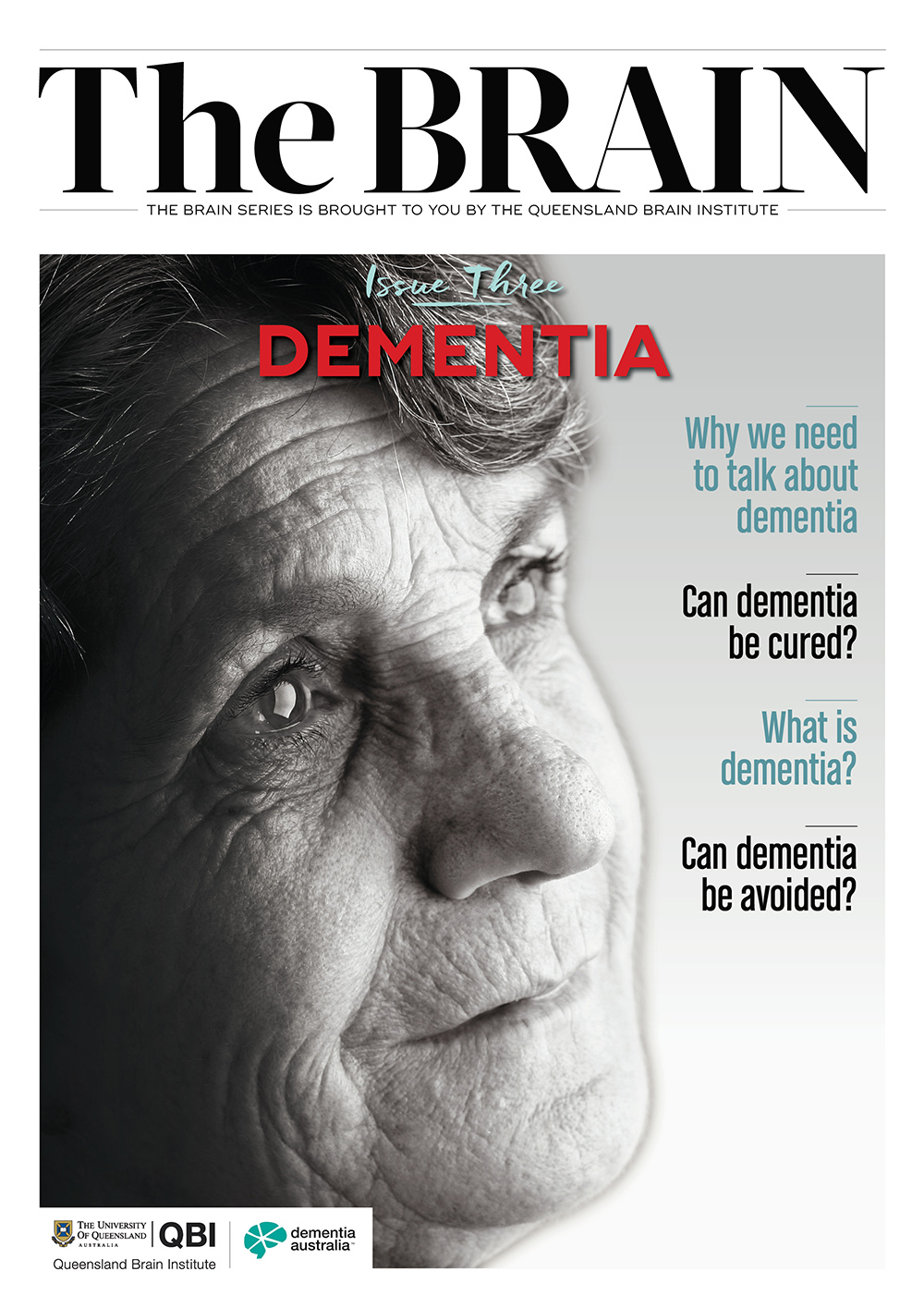
Dementia: one of our most pressing health issues
 Dementia is one of society’s most pressing health problems. It affects almost one in 10 people over the age of 65 and is the second leading cause of death in Australia. With life expectancy projected to increase in coming decades, more than one million Australians will be living with dementia by 2050 if no effective treatment is found.
But dementia is more than just numbers. Its tendrils reach far and wide: nearly all of us know somebody affected by the condition, whether it be a family member, friend or colleague. People with dementia experience devastating changes to their lives, gradually losing their independence, intelligence, personality, and ultimately, their identity. Families experience the terrible burden of watching their loved ones suffer and disappear before their eyes.
Managing the impact of dementia is focused on three vital issues: care, treatment and prevention. With economic and personal costs of care rising, the need to delay the onset and progression of dementia, and to find cheap, effective and easily available treatments also grows. This is particularly important in a country such as Australia, with its vast population spread, which often results in great distances between specialist medical centres.
The only way forward is through research. In 2013, the Australian Government committed to boosting dementia funding to more than $60 million per year and established the National Institute of Dementia Research to coordinate priority research. That same year, the Queensland Brain Institute (QBI) at The University of Queensland established the Clem Jones Centre for Ageing Dementia Research (CJCADR), Australia’s first dedicated dementia research centre, now home to more than 90 exceptional researchers. These scientists are united by the deep desire to understand the fundamentals of dementia: how and why dementia starts, how to stop its progression, and how to develop effective treatments.
These aren’t easy questions to answer, but with bold ideas, bright people and hard work, we are determined to defeat this disease.
The Brain: Dementia reveals compelling progress towards understanding and treating this devastating condition.
Dementia supporters
Media Enquiries
Email: communications@qbi.uq.edu.au
Contact
+61 7 3346 6300
qbi@uq.edu.au
QBI Building (#79)
St Lucia, QLD 4072 Australia